shopping-cart
search
×

feature
Essay

Art and Power: Networks of Patronage in Contemporary South Asia

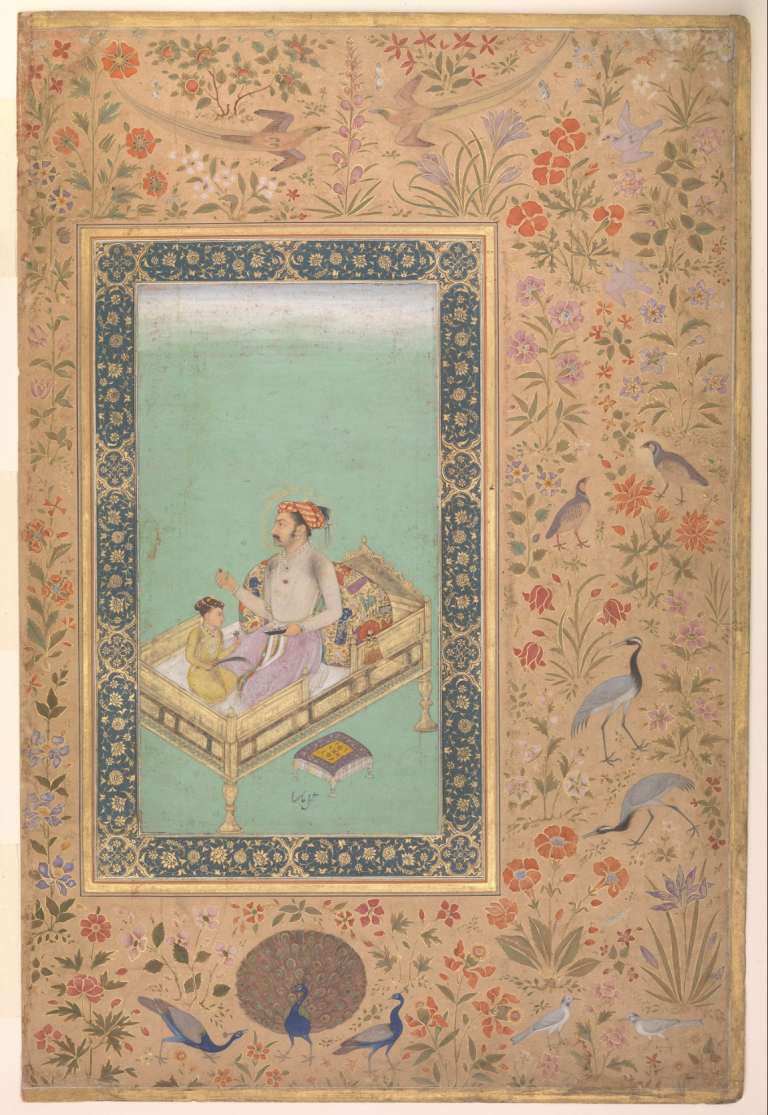
From ancient Buddhist monuments to medieval royal temples and the syncretic visual world of the Mughal court, art in the Indian subcontinent reveals a deep history of patronage. As a system of exchange, patronage also reveals underlying expressions. The inscriptions of donors at Buddhist sites at Sanchi, Amaravati, Karle, Nashik and Kuda, among others, reveal a diverse array of faithful patrons—gardeners, fisherfolk, merchants, traders, monks and nuns—brought together by a shared religion. [1] On the other hand, the idealised portraiture of Chola royals in southern India—which incorporate religious symbolism—and Jehangir’s allegorical portraits, project real and desired imperial power. [2] It was in the late 19th and early 20th centuries that patronage, as we know it today, began taking shape in the Indian subcontinent, even as artists moved towards ‘modern’ forms of art. These changes, too, were underpinned by political intentions, this time by the British.

Read More
feature
Review

Preserving Identities: Exploring Nepal’s Personal Histories in ‘The Importance of Loss: Migration, Memory and Continuity’

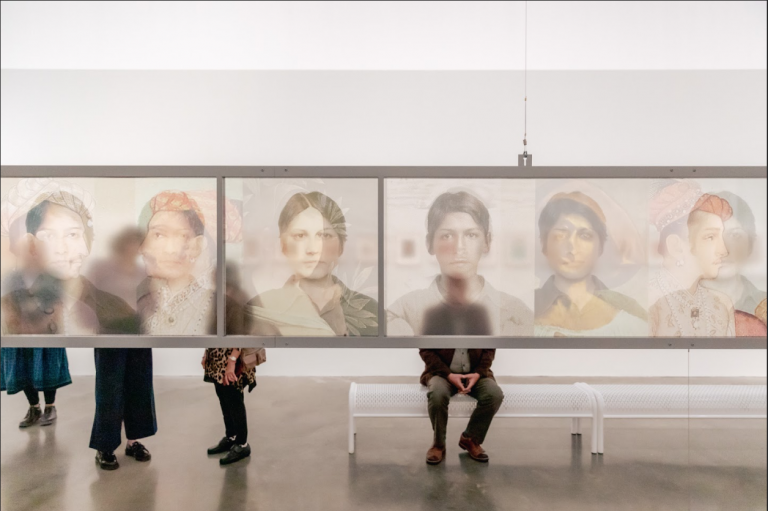
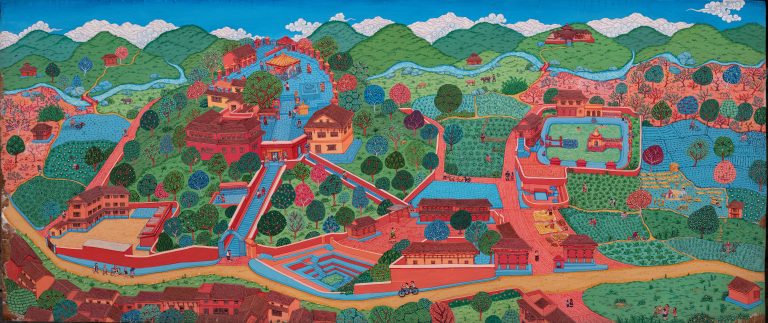
In a world of Artificial Intelligence (AI), when we negotiate with our identities on an everyday basis creating digital beings and landscapes coded by inputs from uncountable sources, it is pertinent to ponder upon our history and tradition as tools of archive making and representation of contemporary life. The artists Hitesh Vaidya, Jagdish Moktan, Nabina Sunuwar, Pooja Duwal and Tashi Lama of Aakrit Collective mentored by Sujan Chitrakar seem to employ the very tools in the exhibition The Importance of Loss: Migration, Memory and Continuity to navigate through the cultural and socio-political landscape of Nepal marked by displacement that informs the everyday lives of the contemporary citizens. Curated by Georgina Maddox, the exhibition is presented by Unnati Cultural Village, Nepal, that endeavours to preserve and promote its cultural heritage through multidisciplinarity in the arts.

Read More
feature
Review

Weaving Identity: Reclamation of Craft

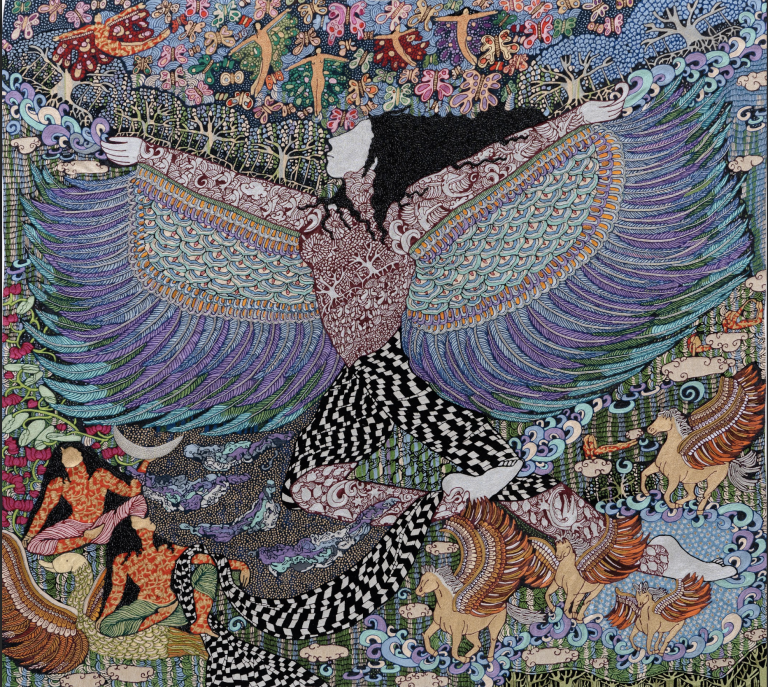
The press release and curatorial essay for Seema Kohli's latest exhibition follows a predictable path, connecting the dots between her work and conventional themes. However, such a narrow interpretation only skims the surface of her boundless conceptual potential, hindering the opportunity for profound exploration. In her solo show, Kohli delves into the cosmic energy of femininity and the mystical world of medieval bhakti saints, while also inviting introspection through her intricate blend of images, materials, textures, and labor. These elements not only raise pertinent questions about the creation of value in a commodified society, but also shed light on the persisting caste hierarchies within artisanal practices. Her exhibition also illuminates the complex dynamics that emerge when craft practices intersect with contemporary art.

Read More
feature
Review

ANALOGOUS RELATION OF ARTS AND OBJECTS

Humans and objects share a very close and intimate relationship. Humans identify objects and establish a correlation which further is associated with time, while being recognised by human memory. Objects become a source to initiate pre-established relations of humans with time. Once identified, they add evidential value to time and space. The notion of time and space becomes an important part of the curatorial intervention in the exhibition Things are Vanishing Before Us by Gallery Dotwalk. It is through this that the viewer constructs and establishes the correlation between past and the present, and what posterity holds. The centrifugal force of the art work opens the room for a visitor to revisit the relationship with the past in the present, and how it serves as an opportune moment to shape the future. This, in the exhibition is achieved with the viewer’s familiarity with objects.

Read More
feature
Review

The Omnipresent Self

The river flowing through me…’ is an autobiographical landscape that is, at once, psychological, environmental, metaphysical and historical. - KP Pradeep Kumar The exhibition features Pradeep’s most recent body of works, which talks about artistic subjectivity as the internal self, and the constitution of the self in relation to the exterior ‘others’, to challenge the separations of eco-diversity of our times.

Read More
feature
Review

Beyond the Page: South Asian Miniature Painting and Britain, 1600 to Now

The exhibition Beyond the Page: South Asian Miniature Painting and Britain, 1600 to Now examines the traditions and legacies of South Asian miniature painting through major examples of miniatures from as early as the mid-16th century right up to the present day, with the re-engagement of modern and contemporary artists with the form. The exhibition brings together 180 works from private and public collections across the UK and internationally. This is the first time that many of the early miniature paintings from the Royal Collection, the Victoria & Albert Museum, and the British Museum have been on public display. The exhibition is a chance to chart the trajectories and encounters between the traditional early miniatures, and modern and contemporary reinterpretations.

Read More
feature
Review

SUDARSHAN SHETTY: BETWEEN RUIN AND RECOVERY

The exhibition Only Life, Myriad Places attempts to create a transformational space, emulating the labyrinthian mind. Toying with existence in its many forms, succumbing to death and subsequent new or renewed beginnings after the course of its journey, leaving behind stories retold through the stillness of assorted totems, the idea of the perpetual process of rebirth and its continuum can perhaps be measured by the pace, evolution, and number of works and mediums presented.

Read More
feature
Review

Chemould@60: From Framing to Futuring the Art of the City and the City of Art

In 1963, a young couple invested in Bombay’s cultural heritage chose to support the arts in the city that was so beloved to them. Sixty years from then, the city has come to be known for its vibrant arts ecosystem, and the couple’s attempt in building a contemporary art space has often been referred to as a breeding ground for fearlessness when it comes to artistic expressions. From having played a crucial role in supporting the Bombay Progressives, to making space for dissent within the white cube space, from fostering what we know as Indian contemporary art to expanding these boundaries, the beloved Chemould of Kekoo and Khorshed Gandhy has seen itself evolve over the decades from a noun to a verb. Bringing this vision to a celebratory exhibition, the curator Shaleen Wadhwana shifts focus to the burgeoning archival material that speaks to the legacy that began with Kekoo Gandhy’s keen interest in the visual arts in the 1960s.

Read More
Review

Stories of Light and Song: Contemporary Practices in Asia

Step into Stories of Light and Song: Contemporary Practices in Asia (henceforth, SoLS) -- exhibited at the Sarala Birla Gallery, Terrace and Lawn of BAAC. SoLS is a group show featuring the works of Baaran Ijlal, Gidree Bawree Foundation of Arts, Ranbir Kaleka and Sudharak Olwe. It comprises a travelling sound archive; a site-specific, collaborative bamboo installation by craftsmen from West Bengal and Bangladesh; video-art; and photography.

Read More
Report

TAKE Calendar: The South Asian Edit 2024

The South Asian arts scene has been at its peak. With experimentation in mediums and innovative platforms, South Asia and its diasporic artists constantly strive to push the envelope of contemporary art. To bolster this wave of energy, there are multiple key events that highlight, empower and uplift South Asian visual voices. Here is a curated guide to important art events across the globe that all South Asian art connoisseurs must bookmark. The year is marked with a promising line up of art fairs, festivals, public installations, and biennales. Let the 2024 art hop begin!

Read More
1 3 4 5 6 7 26
advertisement