

If a thing of beauty is a joy forever, as English poet John Keats would have us believe, then what is to be made of a show that highlights decrepitude? Is its job to remind us of the ephemeral nature of life and everything in it? That the value of the grotesque and the repulsive is in its mere existence, as it allows pretty perfection to stand out further? Or, alternatively, does the unpleasantness itself hold value as a much-needed contrast to whitewashed ideals? These are some of the questions that come to mind upon browsing through ‘Party is Elsewhere’, a multi-artist showcase which took place in February this year as an India Art Fair Parallel offering.
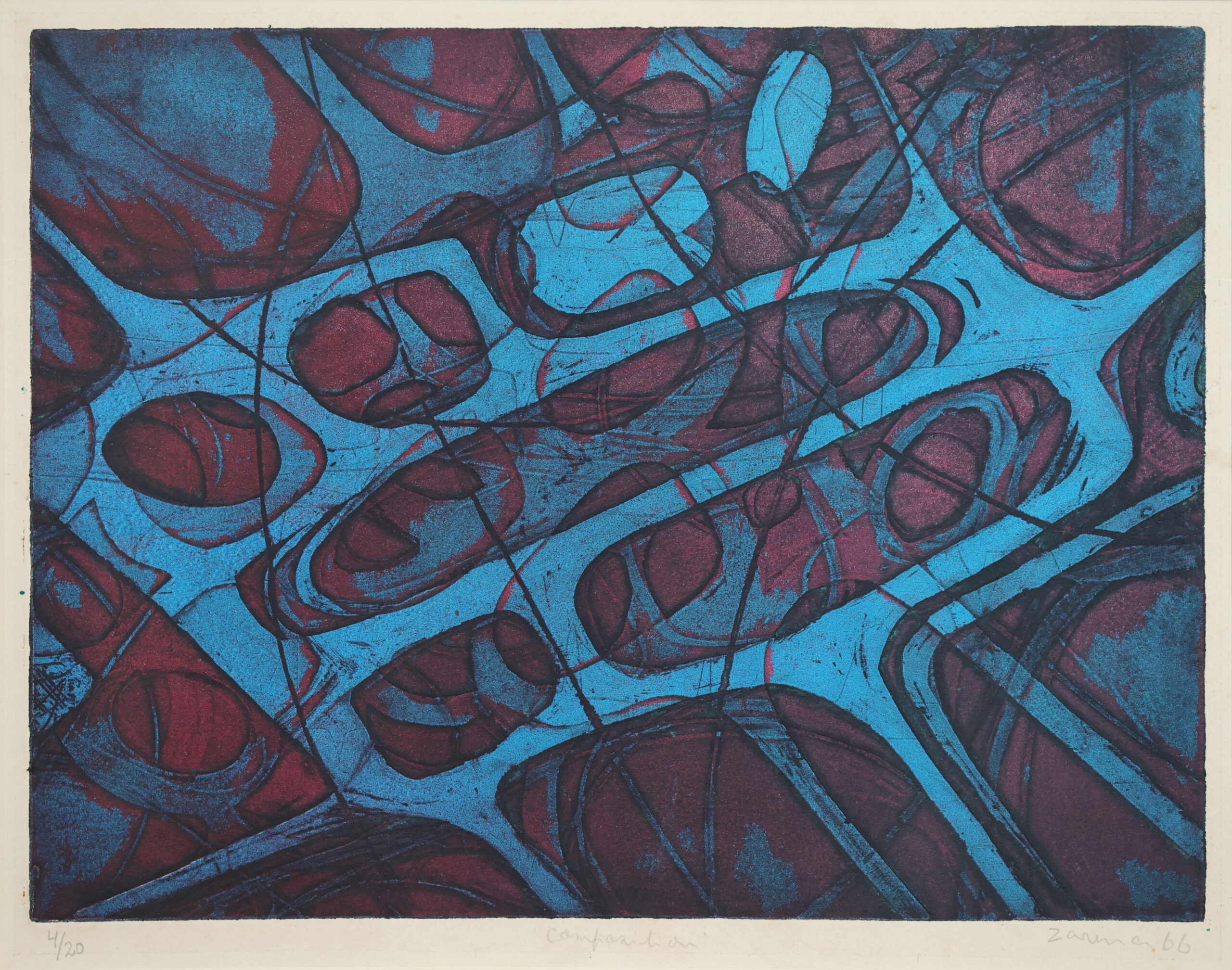
Zarina Hashmi, Untitled, Image Courtesy: The Radial
More interesting than its content, though certainly that deserves praise as well, was the location chosen for this temporary, standalone exhibition put together from private collections, including that of the Devi Art Foundation. It was housed in an abandoned nightclub in Block F of the iconic Connaught Place outer circle, the shape of which inspired the interesting name: The Radial. It sat in a state of grave decay for years, and when curators Reha Sodhi and Amit Kumar Jain, came across it while out for another task nearby, the space became the inspiration for the show.
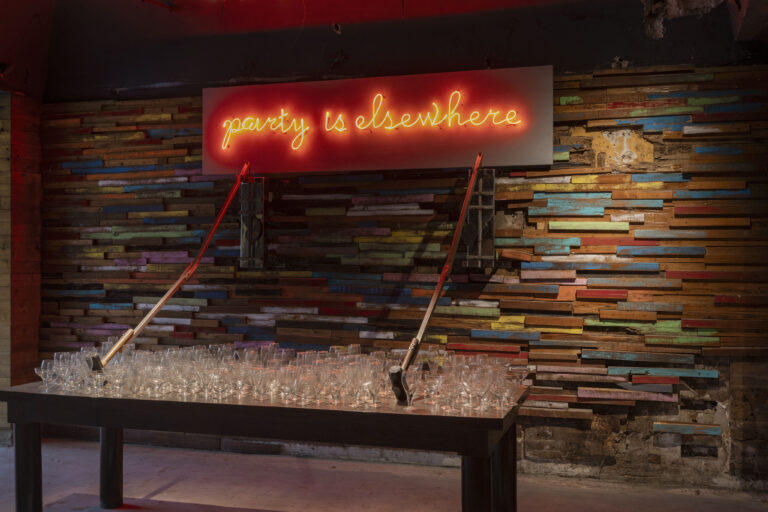
Its mouldy walls, falling beams, broken toilets, stained tiles, ill-lit staircases and gloomy remnants of giddy epithets like ‘OMG’ dating back to the nightclub’s heyday, took the space beyond backdrop and made it a work of art itself. The party in this experimental space was certainly over, sparking comparison with the state of the art world, and perhaps the world in general. Upon visualising the project, the curators recalled a quite literal artistic reference i.e., Sudarshan Shetty’s 2005 kinetic sculpture titled Party is Elsewhere, which was first shown in Mumbai at a gallery which later burned down. In it, the brightly lit visage of a neon sign declared the art work’s name, as two large mechanical arms periodically beat down on a table filled with old wine glasses. Its shock value was both literal and conceptual, as the loud bang resonated far beyond the first viewing, making one think of the cost of over-construction in cities. The piece then fittingly became the showstopper and namesake of the show.
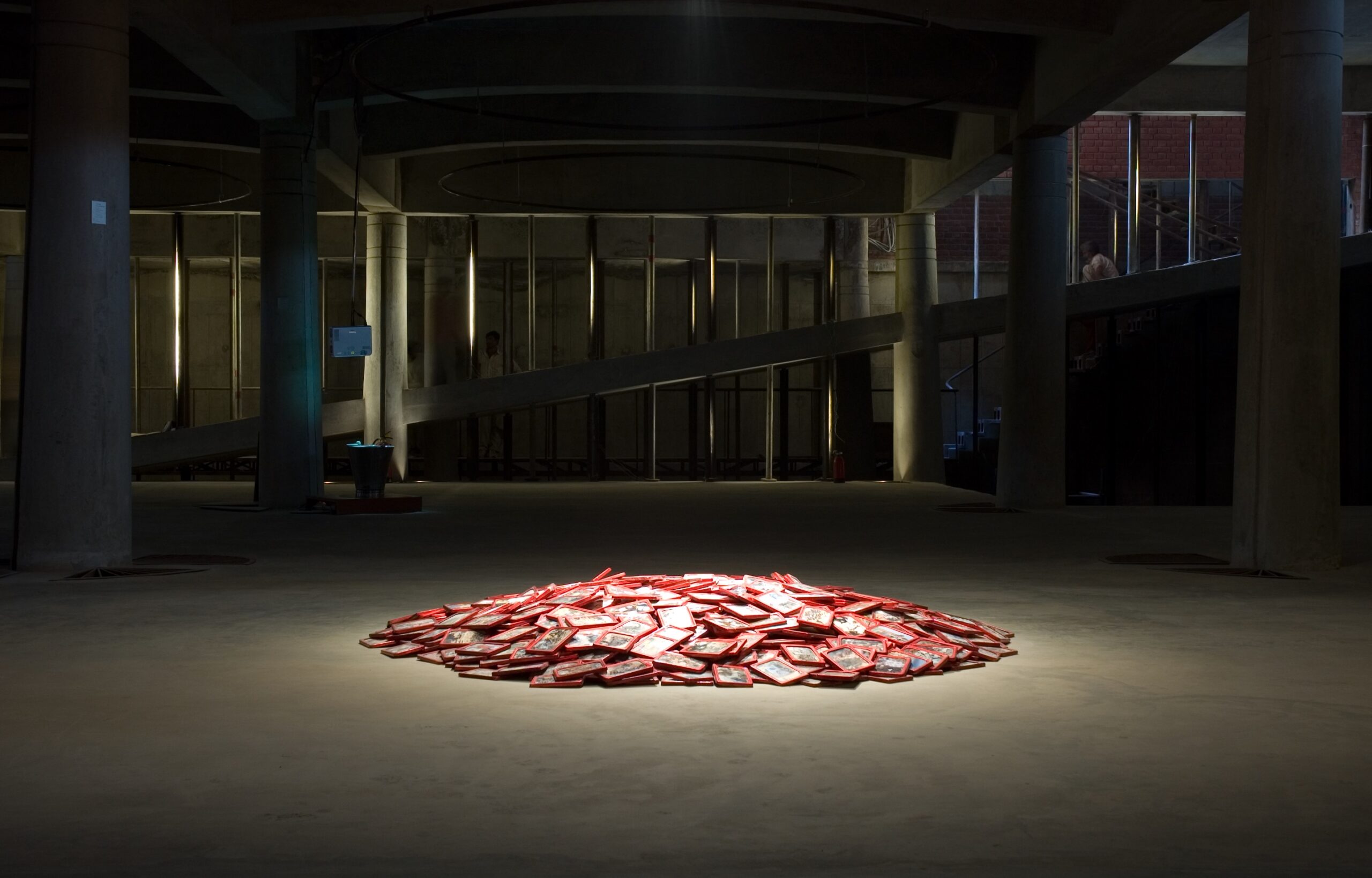
Vivan Sundaram, Great Indian Bazaar, Image Courtesy: The Radial
The rest of the South Asian and international artists whose paintings, sculptures and installations adorned the grungy walls, floors and nooks of the Radial, were chosen for their pieces to converse with each other in a meaningful way, while also sparking queries and conversations from viewers. In furtherance of the complete eschewing of the white cube gallery format, the art works were presented without any tags, boards or explanations. With only a brief explanatory note at the entrance speaking about the vision of the show, visitors witnessed the art without preconceived notions, and engaged with it differently than they would have knowing artist names, histories and market prices. They could also assign their own meaning to what they saw, or no meaning at all.
Were one to keenly notice a thread running through the display of art, however, they would see a focus on questions of temporality and the fleeting nature of existence. As announced in the curatorial note: “Like a musical composition orchestrated by pauses and subtle resonances the exhibition’s tones swell and recede, each artwork pulsing within a shared rhythm. Moving between reflections, flux and transformation, the exhibition invites us into a contemplative ether where memories hover like half-remembered dreams and the boundaries of here and elsewhere softly erode.”
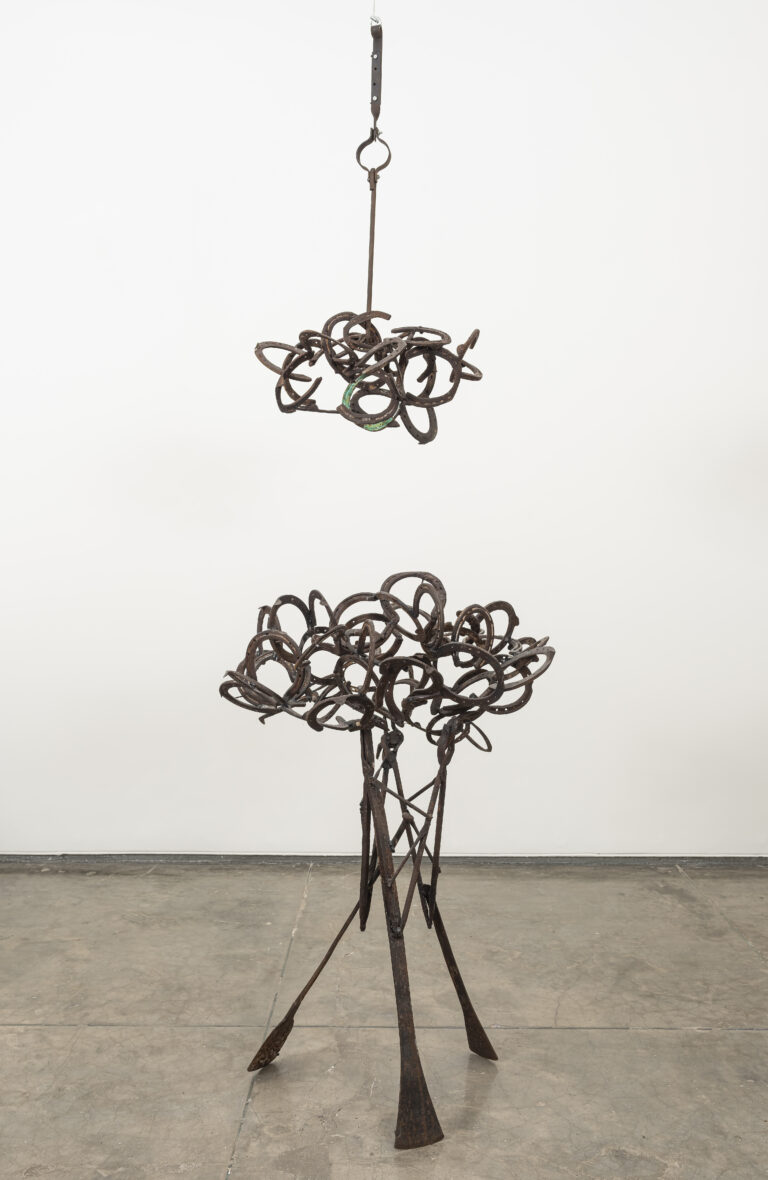
When one delves into the selection of the artists whose work was on display at Party is Elsewhere, one discovers a variety of practices, geographies, and material choices. On display is subtle abstraction and literal figuration, traditional modes and methodologies as well as experimental conceptual inquiries. Some works that stood out include Alwar Balasubramaniam’s pair of Untitled sculptures made in 2004, which face each other in their demarcated glass boxes. One made of sand looks perfect, while its neighbour, made from camphor, is in a permanent state of decay, on its way to completely disappearing in a few years.
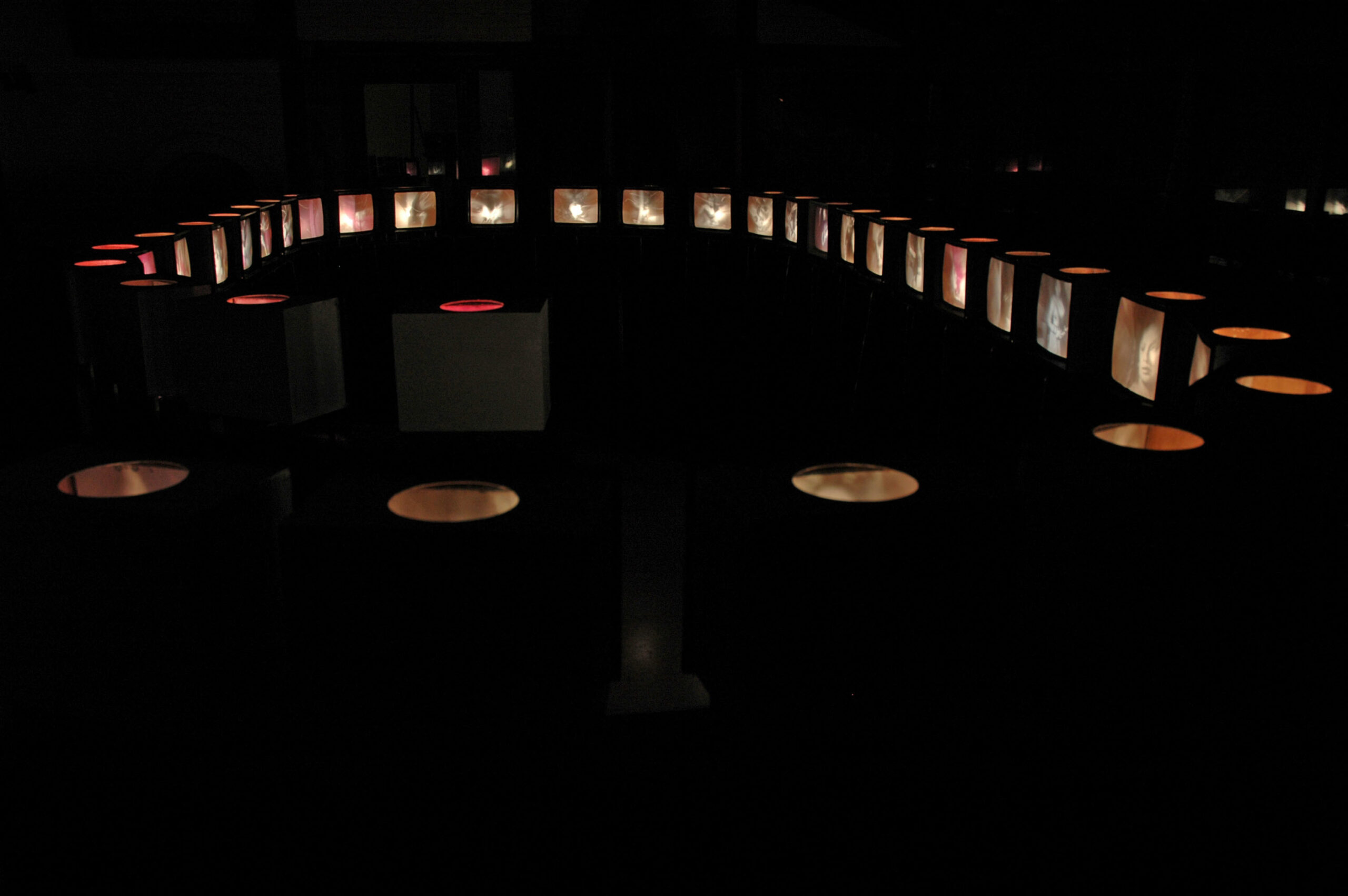
Sheba Chhachhi, Mermaid Mirror, Image Courtesy: The Radial
A heap on the floor is far from the disorderly mess it seems at first sight. On close inspection, each small rectangular piece shows vintage photographs encased within bright phone covers. Great Indian Bazaar by Vivan Sundaram is an ode to the exuberant disorderliness of Indian markets. It is offset by a bright painting of Bharti Kher’s The Walls Have Ears (The Private Softness of Skin), whose signature whorls and bindis form the backdrop to a massive insect inching towards a comfortable looking bed and its intended victims.
Atul Dodiya’s 26/11 is a large shutter that bears a Munsch-esque Screaming figure on the outside as a comment on the heinous violence of the Mumbai attacks of 26/11. In Mermaid Mirror, a series of doll-like TV sets by Sheba Chhachhi, are set in a circular pattern and show videos of Bollywood actress Meena Kumari. Susanta Mandal’s It Doesn’t Bite makes a big impact through a simple sculptural mechanism. His machine makes bubbles at one end and destroys them with a sharp pincer at the other. Conundrums, a projection of thousands of ants on the floor of a toilet by Mithu Sen, makes one recoil. It’s a deliberately orchestrated reaction so one can think about the implications of consumerist excess.
Other noteworthy artists include Ayesha Sultana, Himmat Shah, Hiroshi Sugimoto, Jitish Kallat, Jyoti Bhatt, Krishna Reddy, Mithu Sen, Monika Correa, Mrinalini Mukherjee, Nalini Malani, Nasreen Mohamedi, Rana Begum, Raqs Media Collective, Sakshi Gupta, Sankho Chaudhuri, Shilpa Gupta, Shovan Gandhi, Subodh Gupta, T Venkanna,Vipeksha Gupta, Vivan Sundaram, and Zarina Hashmi among others.
Through Party is Elsewhere, Sodhi and Jain sought to do away with the intimidation usually associated with viewing high-end, beautiful art. Through a careful curation of works that fit their vision, and the removal of any reference to perceived meanings and understandings, they were able to achieve this goal. The revelry is long gone, what remains now is its aftermath, both in art and in life.
Party is Elsewhere, January 31- 28 February 2026, The Radial.