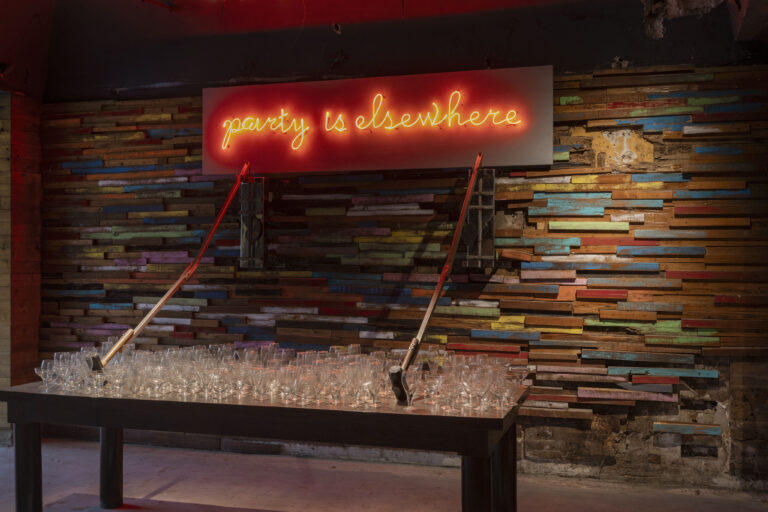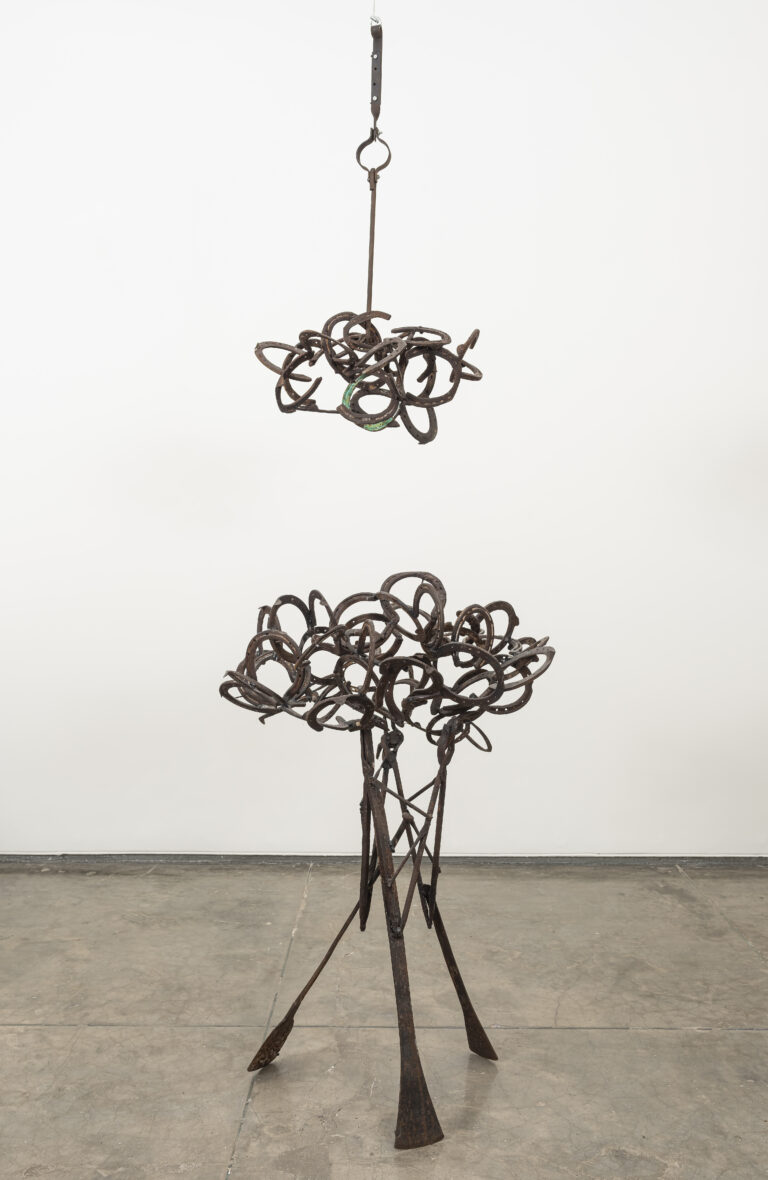


Experimenter Curators’ Hub 2026, Kolkata, India. Image Courtesy: Experimenter. Photo Credit: Anirban Datta.
When Hans Ulrich Obrist was exploring the artist’s studio as a scientific laboratory and a social space for experimentation in ‘Laboratorium’ (1999) co-curated with Barbara Vanderlinden, the artist Carsten Höller would base the very foundation of labs upon doubt and enquiry. Buying a Mercedes station wagon with his exhibition budget, Höller would drive his doubt machine around the city spewing his own confusions with a loudspeaker to baffled onlookers. Perplexity then, rather than a negative condition, was conceived of as an enabling starting point, Obrist would conclude in ‘Ways of Curating’ (2014).
For writer and critic Samuel R. Delaney this doubt became the necessary abyss to cross to arrive at a perceptive projection of the self through text, rather than a mere historical verification of the act of having written. Doubt reverberates within the Founder and Director-at-Large of the intangible Institute in Thailand, Zoe Butt’s, curatorial practice – who sees herself as a writer first – as a means of refusal. “To me this is creativity,” she noted in the fifteenth edition of the annual Experimenter Curators’ Hub, “And is deeply needed in our institutions.”
This doubt resides within Sepake Angiama’s practice which she visualises as a persistent bass tone rumbling underneath institutional work almost as an unsettling reminder which sometimes percolates through its crevices of questioning. As the Artistic Director of the Institute of International Visual Arts (iniva) in London, Angiama looks beyond surficial discourses of “exhibition as king” and instead towards “what’s exhibited and what’s left” considering the lack of programming artists of colour in institutions in the UK, decades after the British Black Arts movement pushed for de-imperialising the institutional mind and Rasheed Araeen’s landmark exhibition at Hayward Gallery in 1989, foregrounding the impact of colonialism – only for Partition to be left out of school textbooks in the UK today.
It is a certain institutional malleability that Angiama moves towards, working against their instinctual need for structural integrity. Returning to the archive becomes evidentiary for iniva, treating it as a living organism throbbing with the radicality of works by artists of colour who are excluded from institutional conversations. “What iniva does is acts of remembering and showing the work of such artists in a lot of different contexts,” she explained, “However curation doesn’t end there but it’s also extends to doing the work around racism – as many institutions especially in the UK are still very racist and even if programming, don’t create the right conditions for an artist to be able. to show their work.”

Zoe Butt, ‘Not Allowed for Exhibition’, Space/Limit: Phan Quang’ at San Art, 2013.
It is also a shift away from the Eurocentric canon of modernism towards regional art movements, alternate timelines and other ways of sensing the world. “I have always struggled with how urban, fluent and well-versed the ‘modern’ is,” stated Shabbir Hussain Mustafa, Chief Curator at the Singapore Art Museum (SAM), “So what does it mean to create a critique of the so-called canon from within and develop this thinking from outside the territorial West – which will always be my position.” He recalled the alienation felt by Malaysian artist Latiff Mohidin after he arrived in Singapore from Negeri Sembilan and how the memory of his village stayed with him in his later practice. “So much so that it has become a reflection of the relationship I have with nature,” the artist would tell Mustafa, “What stayed with me are the sounds of remoteness. The artist Ismail Zain often described my peasant childhood as a ‘fever’ that I carried from my far-off village in Malay to Europe in the early 1960s. How easily modernism could be disturbed.”

Installation view, Tropical: Stories from Southeast Asia and Latin America, National Gallery Singapore, 2023. Image credit: National Gallery Singapore.
In her essay ‘When Was Modernism in Indian Art?’ the critic Geeta Kapur putsforth the argument of the unsteady status of modernism as being simultaneously desired and abhorred amidst anti-colonial struggles and how it reflected in the practices of artists like Ramkinkar Baij at Kala Bhavan in Santiniketan, moving towards “postcubist expressionism” with his abstract sculptures drawing figures from his everyday life – or Jamini Roy beyond the Kala Bhavan circuit in Kolkata, amalgamating “folk iconicity” and “urban commodification”. The art historian R. Siva Kumar would term this shift in practice as “contextual modernism”, foregrounding Santiniketan as a generative ground for this turn in Indian modern art.
To decolonise therefore is to also take apart the European art historical timeline as universally prevalent, remarked Angiama who would come upon Santiniketan in her research for alternate radical art pedagogies. This changing of lens also reflects in the way Mustafa conceptualises fabulations with the curatorial – particularly through the exhibition ‘Tropical: Stories from Southeast Asia and Latin America’ at SAM where he returned to Mohidin’s understanding of the tropical or the ‘Tropika’ in Malay, as a state of restlessness felt by South East Asian thinkers from the 1960s as they sought to overcome the “the lingering traces of coloniality and historical linearity” and “progress” as dictated by the newly independent nation state. Siva Kumar’s contextual modernism is repositioned as “pago pago” in Mohidin’s Southeast Asian brand of modernism rooted in the region.
The tropical becomes a “subterranean consciousness” which finds figuration in Mustafa pursuing a story of Filipino painter Victoria Edardes meeting Mexican artist Diego Rivera when the former was in New York City – which he indeed was. “They had these incredible conversations and Edardes returned to Manila and they started the muralist movement towards decolonisation,” he said, “I spent close to two decades trying to track the story down but there was no evidence they had met. But the fact that the story is told in circles of Manila says something to me. So, we built an entire exhibition around these fabulations.” It’s perhaps that consciousness also revealing itself when the only gallery willing to send a Paul Gauguin work to Singapore for the exhibition, was Museu de Arte de São Paulo – from one tropic to another.

Sohrab Hura, Map of Interconnectedness, 2021. Presented in Growing Like A Tree, curated by Sohrab Hura at the Ishara Art Foundation, 2021. Image Courtesy of the artist and Ishara Art Foundation.
The political potential of the fictitious reflects in Angiama’s work through science fictional notions of how we want to imagine the world today – and inhabiting such spaces even for temporary moments. Visualising that, she configured a fictional meeting between Audrey Lorde and Octavia Butler in All Good Things Must Begin’ at SBC Gallery of Contemporary Art rendered through screenings and reading aloud. Angiama takes from how libraries were historically noisy spaces where verbal outpourings of text floated in the air layered above each other. The performativity inherently involved in reading aloud also becomes a way to look at the positioning of the body to explore ideas – but also registering someone else’s presence made tangible compared to discoursing in a silo.
The body therefore becomes an instrument towards speculative imagination beyond merely privileging knowledge through the eye, for Angiama, and that listens and “trembles with the world” as Sabih Ahmed, Co-artistic Director of the Third Diriyah Contemporary Art Biennale and Projects Advisor at the Ishara Art Foundation would put it, taking from Edouard Glissant’s idea of the écho-monde. Thus, Sepake queries, how does one think about togetherness as we consider the possibilities of understanding art intuitively beyond art historical curricula in European classrooms – sterile white cubes themselves – and reconfigure ways of collective working?

Aziz Hazara, Shab Nama, hologram and multi-channel video projection, surround sound: duration of each 11, Glass, Saudi Soil, Humvee speakers, Raspberry, metal, Plexiglass, wood and antennas, 2025. Presented in the Diriyah Contemporary Art Biennale 2026, In Interludes and Transitions. Image Credit: Marco Cappelletti
“It is really understanding and feeling fundamentally moved by the need to be with,” she noted, “And so what does that infrastructure of care, support and kindness look like?” It’s to live and be alive with each other, Nikhil Chopra, Curator of the sixth Kochi-Muziris Biennale and Co-founder of HH Art Spaces, would mention almost in response. It’s also returning to the sonic as a method of being and thinking, as Ahmed would mention, where relationalities are formed through transforming oneself into tuning forks, catching echoes and making reverbs, amplification as a way of contesting stasis. The pathways of this static electricity become vectors constituting an entangled nervous system of peer networks across geographies charted out by Sohrab Hura as his curatorial note for his exhibition ‘Growing like a Tree’ at Ishara as a blueprint of his experience of friendships within photography. “On the bus journeys with Jaisingh and Sathish along the Tamil coastline they would become my eyes and ears with which I would experience the landscape and make work,” Hura would write, “Little does anyone know that without the two of them, and so many others, much of my own work would not exist.”

Mohammed Alhamdan (7amdan), Folding the Tents, 2026, performance documentation. Presented in the Diriyah Contemporary Art Biennale 2026, In Interludes and Transitions. Photo by Alessandro Brasile. Courtesy of the artist and Diriyah Biennale Foundation.
The processual as a condition of being in the twenty-first century was drawn upon by Ahmed while co-curating the Diriyah Contemporary Art Biennale 2026 with Nora Razian, taking from refugee routes, intersectional socio-political movements like the anti-CAA and anti-NRC protests at Shaheen Bagh, but also microbial movements in the atmosphere churning out weather or gut bacteria determining our lives. “It made us think of choreographies against cartography, choreographies of power and resistance,” he elaborated, recalling serendipitously anti-Zionist birds getting into the propellers of Israeli drones, preventing them from taking off, as the former migrated down to Sudan and Arabia, “What processions are we participating in and already implicated in? Therefore, thinking about the biennale through a choreography of histories, ancestors, dreams, and premonitions that move through songs, stories, plagues, and storms.”
It finds resonance in ongoing political movements across the country where students chant, meme-ify and perform, foregrounding their body and its demands towards structural change in governance as they reinterpret punitive definitions of what it means to be a student in this country or an artist like Shristi Gupta to move beyond their monitored classroom or solitary studio spaces to collectively organise dissent. As Chopra added, the body is fluid and leaks out of institutional spaces.

Experimenter Curators’ Hub 2026, Kolkata, India. Image Courtesy: Experimenter. Image Credit: Anirban Datta
The sonic as voice and agency was drawn upon by curator Tarini Malik when working with artist John Akomfrah during her time as the Shane Ackroyd Associate Curator of the British Pavilion at the 2024 edition of Venice Biennale. “We were talking about the similarities between the church and the gallery, as spaces demanding obedience and reverence,” she said, “Alongside they are also spaces of contemplation.” Amidst the ongoing genocide in Gaza, Akomfrah’s work became altarpieces framed as cantos which saw the act of listening as activism, as Akomfrah created a bricolage of stories from the British diaspora in archival image and film. They shivered underneath flowing trickling water, feeling the world, and reimagining it anew through collective recall.
During her time at the Biennale, Malik would witness the bodily effects of dealing with discrimination upon the late Okwui Enwezor, who was simultaneously celebrated as being the first black curator at the Biennale. Curating as labour was foregrounded by Chopra but beyond that is also the heaviness of confronting institutional collections arriving with their own baggage of hierarchically distinguishing the work of artisans from an artist as Arnika Ahldag, Director of the Museum of Art & Photography, Bangalore, would mention. Or working with a collection acquired by an American military officer, Jim Thompson who arrived in Thailand as a spy during World War II – for Gridthiya Gaweewong, Artistic Director of the Jim Thompson Art Center in Bangkok who programmed critical shows around Thompson’s involvement in the Cold War showing Grace Samboh’s research on the Bandung Conference.
When Gabi Ngcobo, currently Director at Kunstinstituut Melly in Rotterdam was working at The Javett Art Centre at the University of Pretoria in South Africa, she would realise the collection consisted of artefacts robbed from graves of an earlier civilisation that were concealed in the vaults of the university for decades. “I worked with Nolan Oswald Dennis on a film ‘Specifications for a Reverse Archaeology’ to critique how the collection came to be, but there was a lot of resistance to him working with the material and it didn’t sit well with the university.”

Experimenter Curators’ Hub 2026, Kolkata, India. Image Courtesy: Experimenter. Image Credit: Anirban Datta.
Or Zoe Butt setting up artistic spaces within a fragile arts ecosystem with extreme censorship, particularly in one instance by the Vietnamese government during an exhibition by the photographer Phan Huang at Sàn Art which looked at censorship. “The entire gallery was placed under a literal cage commissioned by architects, which was allowed by the government,” she said, “A representation of duress is not allowed, but a physical embodiment of it can be. We challenged the government at the time by placing signs saying “Not allowed for exhibition” on the wall, and by holding public events talking about the art that we cannot see. So, the notion of content being non-representational, but that the discourse can still happen, mapped a certain relationship for me with artistic production.”
For Mustafa, the curatorial exists within a condition of “sly tropicality”, taking from Homi Bhabha’s dodgy figure of ‘sly sincerity’ and Ashish Nandy’s concept of the non-player who regresses rather than progresses. This return was through Mustafa going back to display systems designed by Brazilian architect Lina Bo Bardi to counter the arrival of the white cube in Singapore after a fateful foreign return from New York by a curator in 1979 deciding Singapore needed white walls, track lighting and vitrines. In an attempt towards a more collective and biophilic inhabitation of the space within the tropical, Mustafa rethinks Bo Bardi’s designs with Singapore-based architecture firm WOHA for ‘Tropical’ towards making space for non-linear encounters and alternate ways of looking, but also decolonisation within a space of imposed sterility. It resonates with what Ahmed would mention in an interview a few years ago, about the very idea of the curatorial as testing together with other thinkers and practitioners, the structures that institutions came with. Therefore, what we return to is the idea of the laboratory that we began with, and viewing the curatorial within that space as a collaborative testing ground, consistently sensitive to what shifts, drifts and remains.