shopping-cart
search
×

feature
Review

A Transformative River and Embedded Dialectics: Reflections on a river of unrest …a delta of dreams by Paula Sengupta

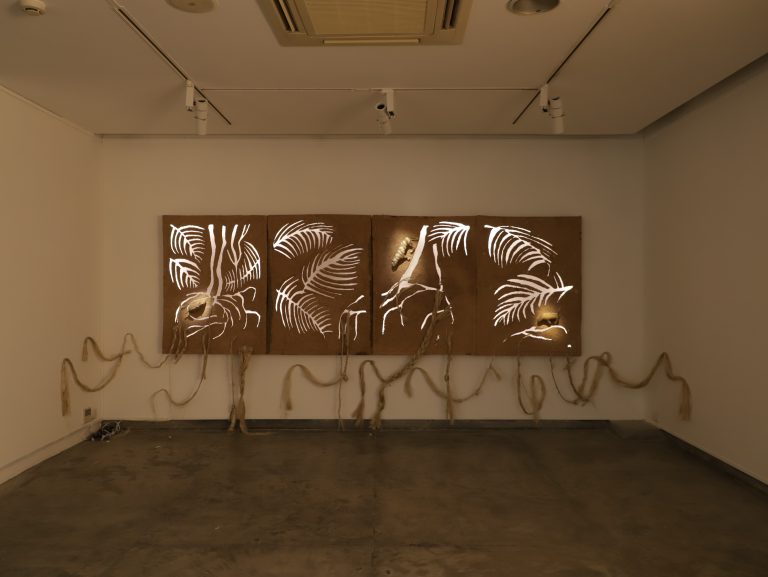
In many ways, Sengupta’s project is situated between “a river of unrest” and “a delta of dreams.” It is the silent space that occupies the void between evidences, oral narratives, sensory experiences, memory and creative reconstructions. Calcutta and its colonial history have been addressed in her art projects the last two decades offering an unique perspective to assess and apprecitate the city’s entanglement of past and the present. In this recent project, Matiaburj (in which mati indicates clay/mud, and burj implies tower) in south west of Calcutta by the river remains a key site where authoritarian and local histories juxtapose, where fiction-like facts makes way for Sengupta’s ambitious creative reimaginations. With a mindful selection of historically informed materials, that include inherited and constructed textiles, jute fibre, paper pulp and graphic prints, archival history is brought in a dialogue with sensorial experiences.

Read More
feature
Interview

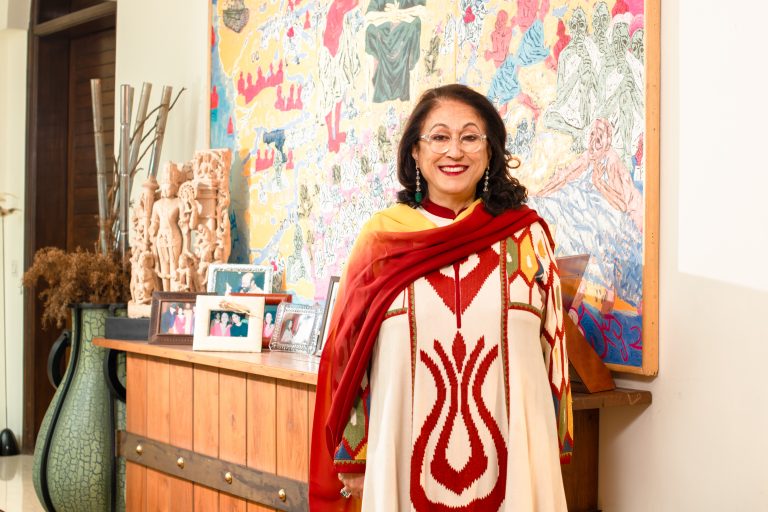
Acts of Sharing Art: Conversation with Kiran Nadar

An interview with Kiran Nadar Chairperson, Kiran Nadar Museum of Art (KNMA) and Trustee, Shiv Nadar Foundation. Nadar has profoundly shaped and inspired the Indian art world, becoming a pivotal force in the country's cultural landscape, with an influential vision that has increased the visibility of Indian modern and contemporary art worldwide. Nadar is on the cusp of setting up the third art museum near the International Airport in the Capital designed by Adjaye Associates. This comes after an inclusive space at Saket Select City Walk which is still one of the most visited museums in the country with a healthy footfall, interactive AI projects and a solid collection of Modern and Contemporary Art. After premiering an AI project at the Venice Biennale featuring the maverick M F Husain, Nadar tells us that one must pay attention to the fine print of working with AI and keep sight of the larger picture. She is excited about the upcoming shows, the India Art Fair and several outreach art programmes and activities designed for children and adults. Georgina Maddox caught up with Kiran Nadar and discussed being one of India’s premium Art Philanthropists; with her, outlining its joys, challenges and plans for the future.

Read More
feature
Review

A Primordial Roar

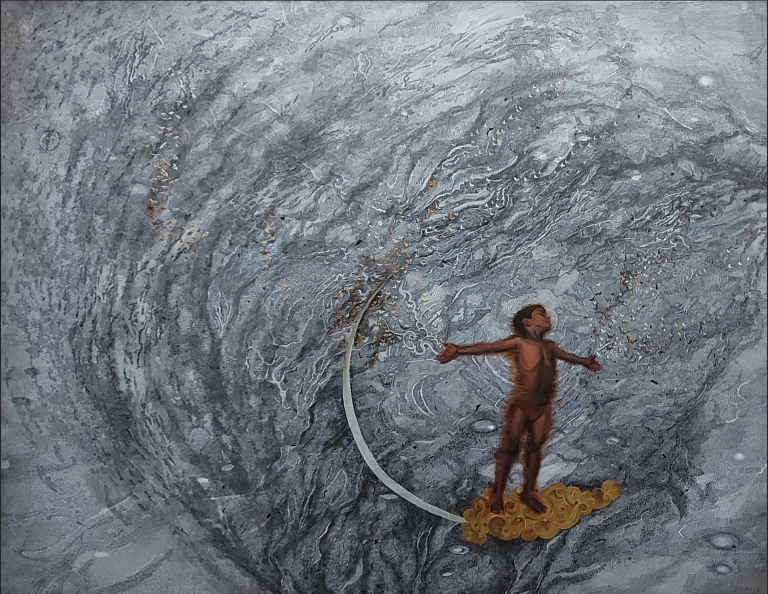
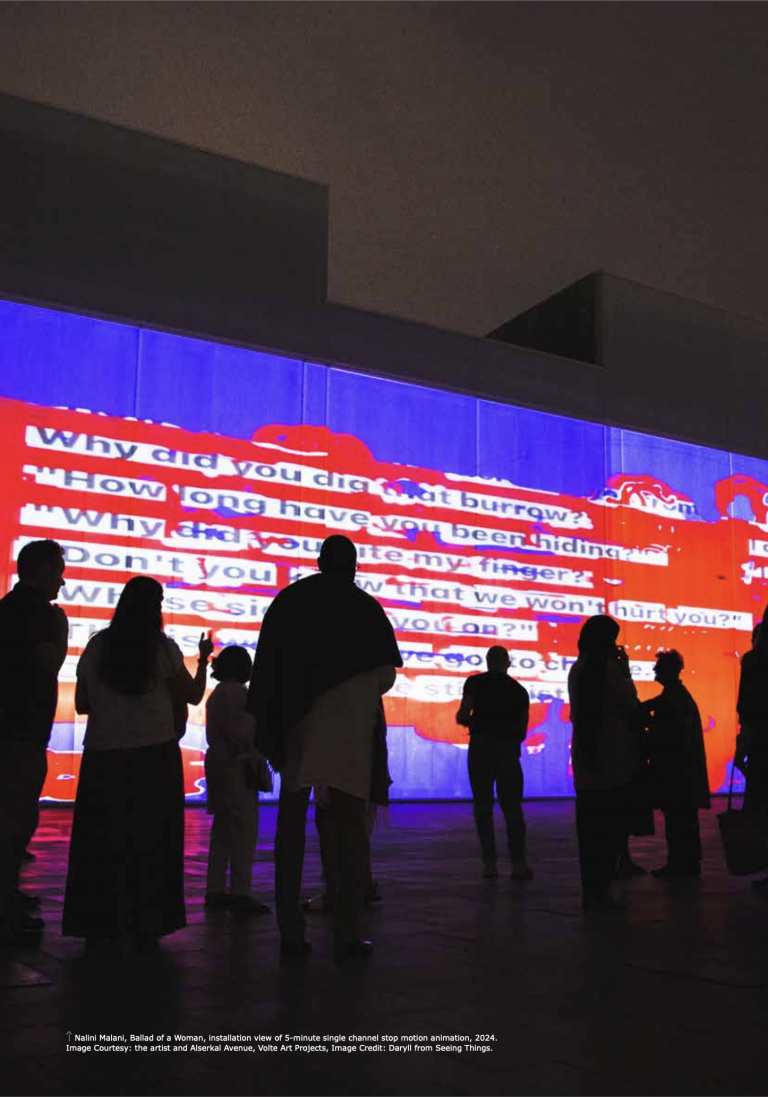
‘Can You Hear Me?’ is a triggered, and triggering, response to a shocking incident of recent history. It drives Nalini Malani’s narrative into an animation where the central protagonist is an 8-year-old girl, whose soul eventually metamorphoses into that of a bird. The show is composed of a sprawling nine- channel video installation, featuring over 88 iPad- drawn animations created between 2018 and 2020, reorganized into a form of an ‘Animation Chamber’. It refers to this poor child’s violent assault and eventual murder by seven men, inflaming already stretched age-old religious tensions and sparking a debate on communal hatred that became a national and international news story, that unfortunately continues to gain notoriety due to shockingly similar and regular reoccurrences. The imagery is loose, and the text is interlaced and juxtaposed, its treatment is playful yet compelling, hiding its dissolute and bleak reality in light-hearted colour changes and buoyant edits.

Read More
feature
Review

The Propitious Garden of Rekha Rodwittiya

“We are meant to survive… beyond our stories " was a selected overview which showcased the Godrej collection of Rekha Rodwittiya’ work of four decades. After completing her Bachelor studies from Baroda she was the first recipient in the field of fine arts of the prestigious Inlaks scholarship to study at the Royal College of Art, London. Upon her return to India Rekha claimed a space for her unequivocally feminist ideology and established herself as an important and powerful voice that questioned the status quo of the art establishment and carved a niche for herself in less than a decade from the start of her career in 1985. “We are meant to survive…” covered the whole gamut of her oeuvre from her student days in Baroda and RCA to her latest offerings from the 2020s. One might be tempted to call the show a mini retrospective although not designated as such officially.

Read More
feature
Review

Pratul Dash creates an archaeology of the land and the mind

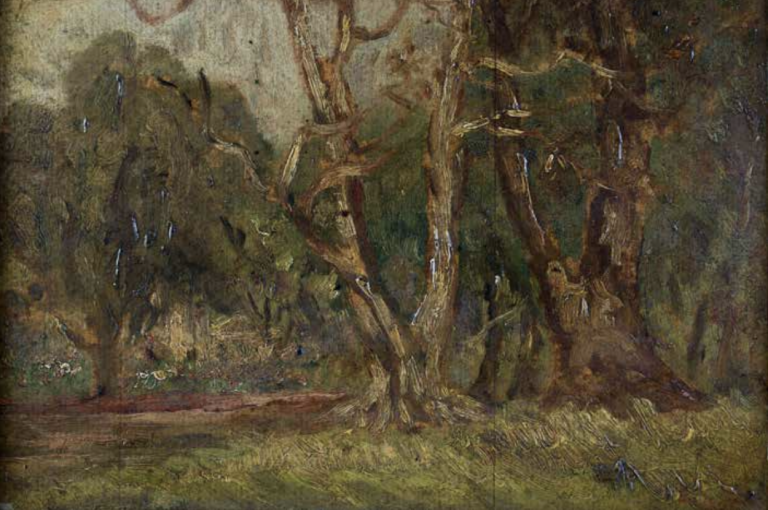
The recent body of work, which was displayed in the solo ‘A Bend in the River’, stands as a testament to Pratul Dash’s ongoing effort to draw connections between ecology and the human mind. Pratul Dash’s works read like manuscripts. Every part of the canvas tells you its own story, only to come together in one cohesive narrative when viewed as a whole. You keep coming back to the works, even the smaller ones, to discover something new that the artist is trying to tell you. What is the truth?

Read More
feature
Review

THE REBEL AND THE RECLUSE: GOBARDHAN ASH (1929-1969)

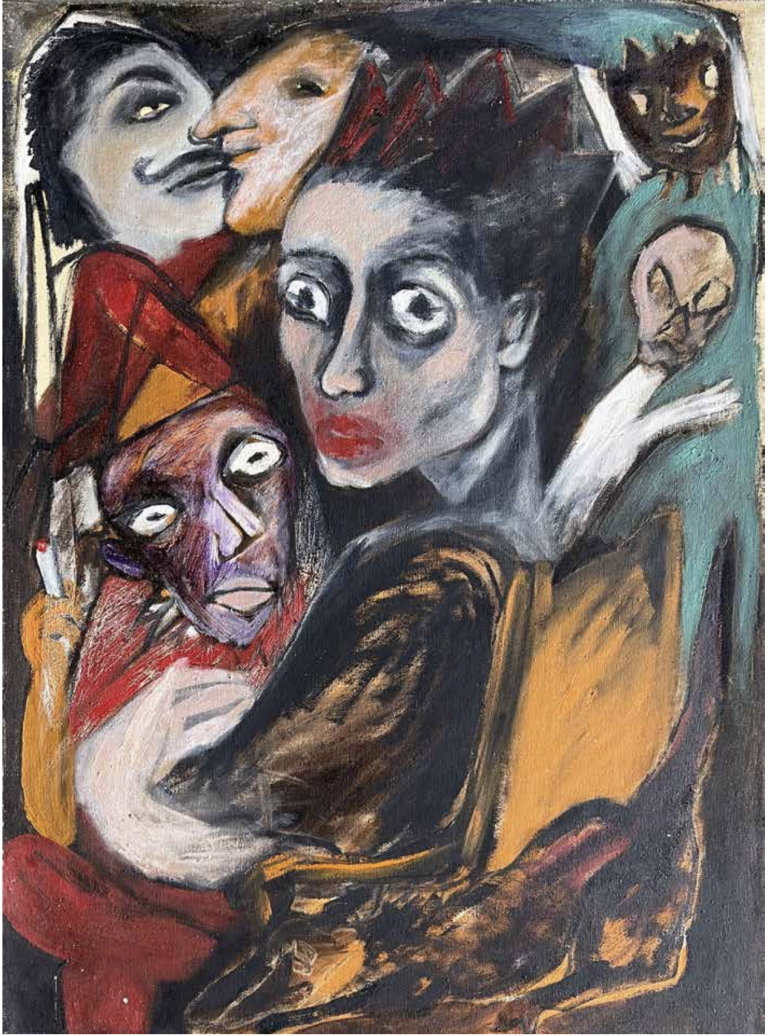
Navigating through the gallery space of the Kolkata Centre for Creativity (KCC), Kolkata, was overwhelming for visitors as around 100 odd artworks of Gobardhan Ash (1907-1996) emerged slowly as visceral experiences around them. The Gobardhan Ash Retrospective Exhibition (1929-1969), archived and documented by Princeps, curated by Brijeswari Kumari Gohil and Harsharan Baksh and housed by the KCC, displayed Ash’s artworks that came out of the most creative four decades of the artist’s life. The artworks were supported by a well-organised timeline (across an entire wall) to help the viewer understand Ash’s growth as an art practitioner as he journeyed across forms, locales and institutions.

Read More
feature
Review

Experiencing Gulammohammed Sheikh’s “Kaarwaan and Other Works”

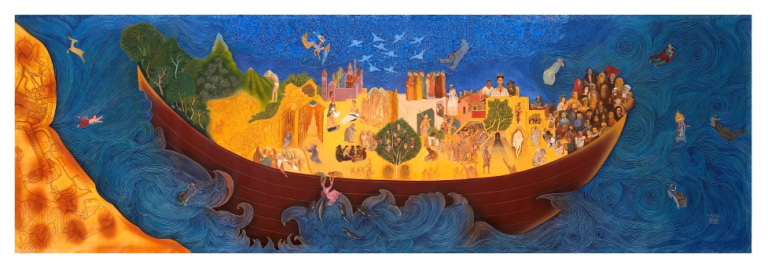
The boat in the painting, Kaarwaan, is not merely a vessel in which people are transported to a destination but it is a self-contained watercraft that also accommodates a large land mass of breathtaking landscapes with buildings, as if luring the people crowded together at the back of the boat to choose the boat itself as their final destination, in a way trapping their souls on the earthly plane of history – history written, and created by humans – although there are the angels and farishtas hovering just above the surface of the water and  around the boat ready and waiting to take the souls on their onward journey to liberation.

Read More
feature
Blog

Third Week in Switzerland

Who is the person that lives in my body now? I observe her from the balcony in my hair. What is she upto? How is she responding to a new kind of solitude? How is she responding to the time and space afforded to her?

Read More
feature
Interview

Of Modernism and Rebellion Arts: Gobardhan Ash Retrospective (1929 – 1969)

The latest exhibition Gobardhan Ash Retrospective (1929 – 1969) presented by Prinseps at Kolkata Centre for Creativity is a testament to the artist’s unwavering commitment to experimentation and innovation. While some artists may find comfort in sticking to a particular style or technique, Ash thrives on pushing the boundaries of his craft. His willingness to explore new avenues and challenge conventional norms has earned him both critical acclaim and adoration from art enthusiasts around the world. One of the most intriguing aspects of Ash's work is his ability to imbue his creations with layers of meaning and symbolism. Every brushstroke, every hue, every composition tells a story – a story that is open to interpretation yet deeply personal to the artist. As viewers navigate through the labyrinth of his imagination, they are invited to uncover the hidden truths that lie beneath the surface, to embark on a journey of self-discovery and introspection. As visitors step into the gallery space, a sensory feast – a symphony of colours, textures, and forms that beckon them to explore further, greets them. From the moment they set foot inside, they are transported to a realm where reality and imagination converge, where boundaries blur and possibilities abound. In an interview with Dilpreet Bhullar, the curators of the exhibition Brijeshwari Kumari Gohil and Harsharan Bakshi unfold the making of Gobardhan Ash Retrospective (1929 – 1969).

Read More
Essay

What ‘South Asia’ signifies today

So. what is South Asia today? With 22% of the world population spread over 7% of the world’s land mass, the region boasts a mix of contradictions, with an average per capita annual income of merely two thousand dollars, a fifth of neighbouring East Asia, and one-twentieth the level of high-income countries. Juxtaposed against the sluggish growth rates and, in some cases, de-growth in Europe and large parts of the West, South Asia is expected to grow faster at just under 6 percent.

Read More
1 2 3 4 5 6 26
advertisement