

The engagement with glass in India is not recent: it is deeply embedded in civilisational. Early evidence of glassmaking, include bead production dating to at least 1200 BC. The reference in the Yajurveda, points to a long-standing and subtle relationship with the material. Historic centres such as Ahichchhatra, Kausambi, Arikamedu and the Deccan produced a wide variety of glass beads that travelled across the Indian Ocean to position India within early global trade networks. The objects carried an aesthetic value supplemented by cultural and economic significance. The legacy continues in contemporary centres like Firozabad, often referred to as India’s glass capital. Here, glassmaking is more than an industry; it is a living tradition shaped by generations of artisans whose deep material knowledge is honed through experience. Their intuitive understanding of heat, timing, and form reflects a practice that blurs the boundaries between craft and art.
Against this rich historical backdrop, India’s contemporary glass movement is gradually finding its voice. Though relatively young, it draws strength from this enduring lineage, with artists and designers increasingly exploring glass as a medium for both conceptual and material inquiry. Questions of sustainability, labour, and cultural continuity are becoming central to how glass is understood and practised today. In this conversation, between Bhavna Kakar and Ashwini Pai Bahadur, it shapes a more connected and visible ecosystem for studio glass in India. Their dialogue reflects on history, practice and the evolving future of glass as both tradition and contemporary expression.
Bhavna Kakar (BK): India has a long and layered relationship with glassmaking from ancient beads and bangles to the bustling workshops of Firozabad today. How does this rich tradition influence the way you see and shape the contemporary glass movement in India?
Ashwini Pai Bahadur (APB): India’s relationship with glass is not a recent one; it is civilisational. From ancient trade beads and ritual objects with a 3500-year history with production dating back to at least 1200 BCE, as referenced in the Yajurveda, to everyday bangles and architectural elements, glass in India has always occupied a place at the intersection of utility, ornament, and symbolism. Key manufacturing centres included Ahichchhatra, Kausambi, Arikamedu, and the Deccan region, which produced a variety of bead types. These beads were major trade items across the Indian Ocean.
This deep, layered history can evoke pride and a sense of belonging, shaping how I view and nurture the contemporary glass movement through The Glass Makers Club, emphasising its roots and ongoing influence.
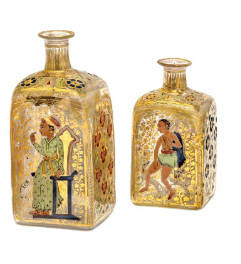
‘Bottles’, Gujarat or Rajasthan, 1725- 1775, Location: LACMA. Image Courtesy: Roli Books/ Tara Desjardins
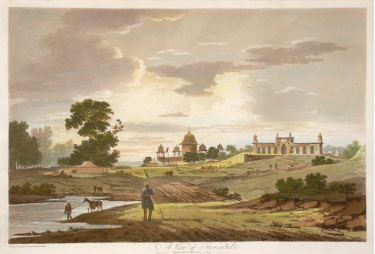
A View of Firozabad by William Hodges, 1787. Image Courtesy: The British Library, London
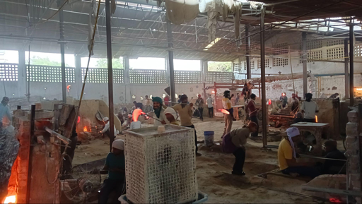
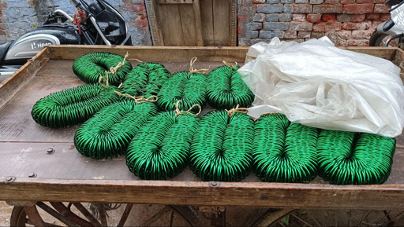
Firozabad. Image Credit: Asad Hajeeboy
For me, places like Firozabad are not merely industrial hubs; they are living archives of knowledge, skill, and memory. Recognising this can evoke pride and a sense of belonging, underscoring how traditional ecosystems shape the contemporary glass movement in India.
At The Glass Makers Club, with the inputs from our curatorial advisor Dr Kristine Michael and an advisory panel including Ahmedabad-based Swagata Naidu, a studio glass art educator from NID, and Kolkata-based Srila Mukherjee, a pioneering glassmaker, from Kolkata we aim to bridge these worlds and alongwith longstanding studio glass maker Reshmi Dey, we see contemporary glass as an evolution rooted in community, bringing together traditional glassworkers, designers, artists, and technologists to foster a shared sense of purpose and hope for the future.
This lineage also compels me to think beyond aesthetics. Glass becomes a medium to address questions of labour, ecology, and cultural continuity. When contemporary artists work with recycled glass, local methods, or collaborative processes, they are building on an ongoing tradition rather than starting from scratch.
Ultimately, India’s long history with glass gives the contemporary movement both grounding and legitimacy on the global stage. It highlights how Indian glass art, rooted in tradition, is increasingly recognised for its innovative contributions to international art and craft dialogues, inspiring a broader appreciation and engagement.

Bohemia (now the Czech Republic), 1599. Location: LACMA
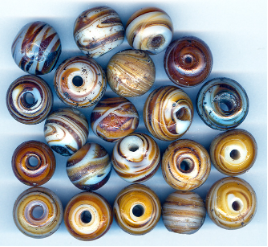
Ancient Glass Beads
BK: That sense of history is remarkable, which brings to mind the pioneers who helped revive glass as an art form. Srila Mookherjee established India’s first art glass studio in 1989, a move that was quite revolutionary for its time, how her journey can inspire admiration and a sense of possibility for artists and collectives like The Glassmakers Club.
APB: Srila Mookherjee’s journey stands as a quiet yet powerful beacon for all of us working with glass today. When she set up India’s first art glass studio in 1989, she was not only introducing a new medium into the contemporary art landscape, but also imagining a future that did not yet exist. At a time when glass in India was primarily confined to utility, industry, or craft, her decision to pursue studio glass as a serious artistic language required conviction, patience, and an extraordinary belief in possibility.
What inspires deep admiration is the longevity of her commitment. Srila’s practice reminds us that pioneering is about perseverance, building vocabulary, and trusting the slow process of cultural integration, thereby fostering confidence in emerging artists and communities.
For us at The Glassmakers Club, her journey is both affirmation and encouragement. It reinforces the idea that ecosystems are built step by step, through mentorship, shared knowledge, and an openness to experiment. Srila’s legacy can inspire emerging artists and collectives to believe in the long-term potential of their practice and community, fostering hope for the future of Indian glass.
As the Director of The Glass Makers Club, I see her path as a reminder that our role is not just to create platforms, but to hold space for future practitioners—to ensure that glass in India continues to evolve, remain relevant, and be rooted in both history and imagination. Srila Mookherjee showed us that one studio, one artist, and one courageous decision can change the trajectory of an entire movement.
More recently, glassmakers such as Reshmi Dey have also played an important role in shaping the evolving landscape of studio glass art in India. Working at the intersection of traditional craft knowledge and contemporary artistic practice, Dey and her contemporaries have helped expand the possibilities of glass as a medium for conceptual and sculptural exploration. Through experimentation with techniques such as glassblowing and flameworking, artists like Dey have pushed beyond the conventional perception of glass as purely decorative. Their participation in workshops, residencies, and exhibitions both within India and internationally has contributed to knowledge exchange and skill development, gradually building a community of practitioners around studio glass. In doing so, they have helped embed studio glass within India’s broader contemporary art discourse, fostering dialogue between craft traditions, material innovation, and personal artistic expression.

Glass Maker Reshmi Dey at her Studio. Image Courtesy: The Glass Makers Club
BK: Education has clearly played a key role in this evolution as well. Since formal glass education in India only began in 2003 at the National Institute of Design, how important do you feel structured learning, mentorship and institutional support are for nurturing new voices in this field?
APB: Education has been absolutely pivotal to the evolution of studio glass in India. The fact that formal glass education began only in 2003 at the National Institute of Design reminds us just how young this ecosystem still is and how much intentional nurturing it requires.

Ceramic and Glass Design at Visva Bharti Shantiniketan. Image Courtesy: Visva Bharti
From my perspective as Director of The Glass Makers Club, structured learning provides artists with more than technical skills. It offers a language, a discipline, and a sense of lineage that helps them develop confidence and responsibility. Glass is an unforgiving medium; understanding its material science, processes, and histories is essential for artists to move from experimentation to mastery, enabling them to contribute responsibly to the field.
Equally critical is mentorship. Many of India’s early glass artists learned through trial and error, often in isolation. Mentorship bridges this gap; it transmits knowledge beyond textbooks, helps artists navigate failures, and fosters a sense of community and hope. For emerging voices, access to mentors can be the difference between remaining a hobbyist and becoming a committed practitioner, inspiring confidence in their journey.
Institutional support completes this triangle. Without access to studios, residencies, funding, research facilities, and platforms for visibility and educational opportunities, education remains incomplete. At The Glass Makers Club, we envision an ecosystem where institutions, practitioners, educators, and patrons work together supporting not just skill-building but also critical thinking, sustainability, and long-term livelihoods.
For studio glass in India to truly flourish, education must be seen as foundational infrastructure rather than an add-on. It is how we ensure continuity, raise standards, and empower a new generation of artists to contribute meaningfully to both Indian and global glass narratives.
BK: On the subject of learning, you have spent a great deal of time engaging with artisans and designers in Firozabad, where traditional craftsmanship meets contemporary design. What has that collaboration been like for you personally, and are there any experiences that stand out in particular?
APB: For me, Firozabad has been a place of deep listening and quiet learning rather than intervention. As a non-practising observer in the glass art ecosystem, I go there primarily to watch processes that have been refined over generations, understand the rhythms of labour, and absorb the lived intelligence embedded in traditional practice.
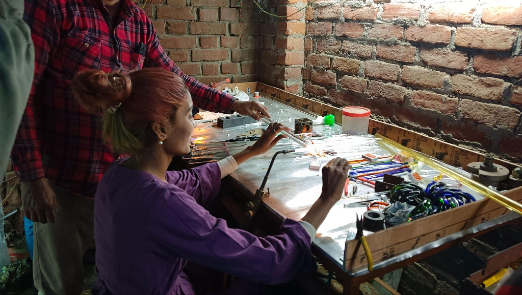
Mubin Khan. Image Courtesy: The Glass Makers Club
What stays with me most is the humility the material demands and the dignity with which artisans work with it, often under challenging conditions. There is an extraordinary sensitivity in the way they read heat, colour, timing, and failure, knowledge that cannot be taught in classrooms or manuals. When contemporary designers enter this ecosystem, the most meaningful collaborations occur when they slow down, observe, and let the artisan’s understanding of glass guide the dialogue.
These engagements have reinforced my belief that learning in glass is not hierarchical. Firozabad constantly reminds me that innovation does not come from replacing tradition, but from sitting alongside it, watching, respecting, and creating space for mutual exchange. Those moments of shared observation, where nothing is rushed and everything is learned through presence, are the experiences that stay with me the longest.
BK: Moving from those early influences to your own journey, what was the moment that inspired you to start The Glass Makers Club? Was there a particular gap in India’s art or design landscape that you wanted to respond to?
APB: For me, the impulse to start The Glass Makers Club came from a growing sense of disquiet rather than a single dramatic moment. Having been closely associated with the fine arts ecosystem for over two decades, as a collector, patron, curator, and observer, I became increasingly aware that glass was not getting its due, not because of a lack of talent or history, but because of a lack of awareness and visibility.
Studio glass in India was quietly slipping from the collective consciousness of fine art collectors. While there were one or two early practitioners who had begun to explore glass as a serious artistic medium, their work remained isolated mainly, insufficiently documented, inadequately contextualised, and rarely integrated into mainstream collection portfolios. Glass was often viewed through a narrow lens: as craft, utility, or industrial product, rather than as a material capable of conceptual depth, technical mastery, and contemporary expression.
What felt particularly paradoxical was that this marginalisation existed despite India’s vast and layered history with glass, from ancient beads and ritual objects to architectural elements, bangles, and the thriving glass clusters of today. There was a disconnect between this rich material legacy and the way glass was being positioned within contemporary art and design discourse in the subcontinent.
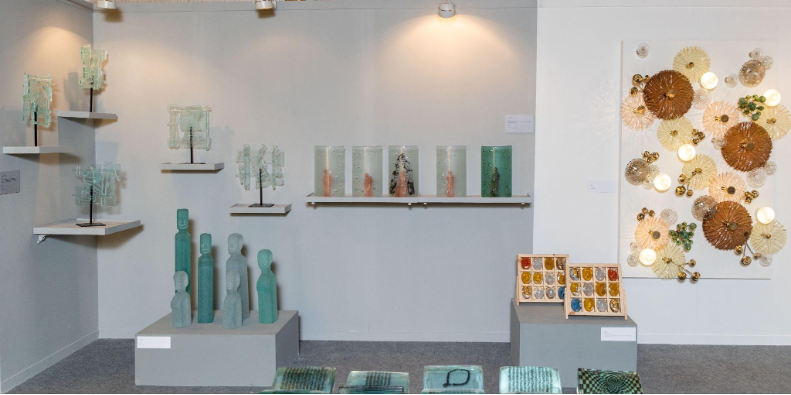
The Glass Menagerie, 2023, Bikaner House New Delhi. Image Courtesy: The Glass Makers Club
The Glass Makers Club emerged to address this gap. I envisioned it as an ecosystem rather than just a platform, one that could bring together artisans, studio practitioners, designers, collectors, historians, and institutions. The intention was to restore glass to conversations of fine art and serious collecting, to build literacy around the medium, and to create pathways where knowledge, mentorship, and experimentation could coexist.
At its core, the Club is about advocacy and continuity, ensuring that studio glass in India is not lost between categories, but recognised, understood, and valued for what it truly is: a powerful, demanding, and deeply expressive medium with both historical gravitas and contemporary relevance.
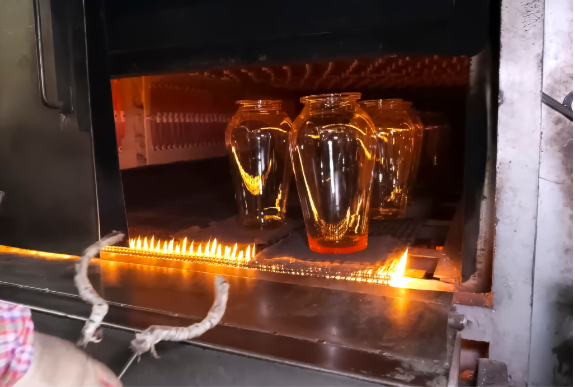
Furnace. Image Courtesy: The Glass Makers Club
BK: Since its inception, the Club has grown into a thriving network of artists, designers and educators. Building such a community was both enriching and challenging. What have been the most fulfilling aspects of this journey, and what hurdles have you had to overcome along the way?
APB: Since its inception, building The Glassmakers Club has indeed been an enriching and consistently challenging journey of my life.
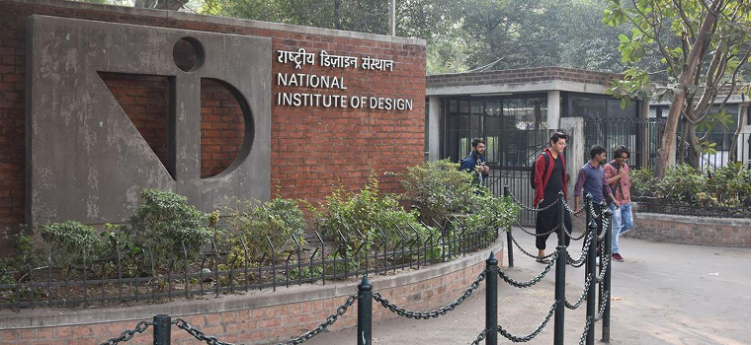
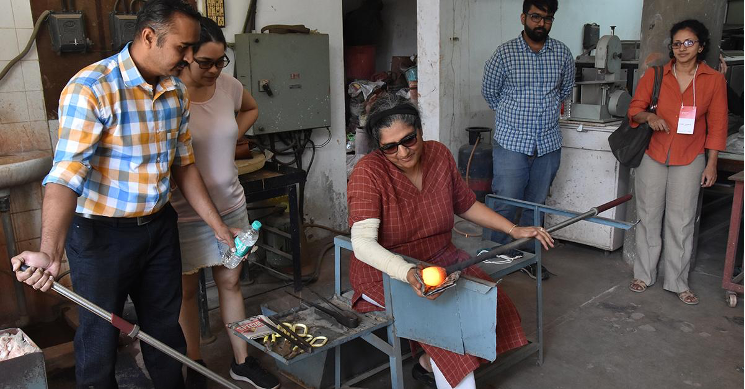
Ceramic and Glass Design laboratory at NID, Ahmedabad Courtesy: NID
APB: The most fulfilling aspect has been witnessing a sense of belonging slowly take shape around a material that had long been marginalised in India’s fine art and design discourse. Bringing together artists, designers, educators, artisans, and students, many of whom were working in isolation, into a shared ecosystem has been profoundly affirming. Seeing conversations emerge across disciplines, watching young practitioners find confidence and visibility, and observing glass being discussed with seriousness, curiosity, and respect have made every effort worthwhile. For me, the real reward lies in enabling dialogue, fostering mentorship, and helping build continuity between traditional knowledge and contemporary practice.
At the same time, the hurdles have been significant. The most fundamental challenge has been the lack of awareness and understanding of studio glass as an art form. Glass has often been perceived either as purely decorative or as an industrial material, making it difficult to position it within the larger framework of fine art collecting, critical writing, and institutional engagement leading to limited critical discourse, very few writers or critics engaging seriously with glass, and an absence of structured pedagogy beyond a handful of institutions.
Cost has been another significant barrier. Glass is an expensive, energy-intensive, equipment-heavy, and unforgiving medium. Setting up studios, procuring furnaces, kilns, tools, and safety infrastructure requires substantial investment. Even raw material procurement is a challenge in India, with specialised glass, chemicals, and compatible materials often unavailable locally and requiring import, adding to both cost and complexity.
Infrastructure, or the lack of it, has been a persistent concern. Very few shared or accessible facilities exist where artists can experiment, fail, learn, and refine their practice without prohibitive expense. Alongside this is the scarcity of trained educators and mentors who can sustain long-term learning, as well as the absence of a robust ecosystem of residencies, archives, and institutional support dedicated to glass.
Yet, these very challenges have shaped the Club’s purpose. They have reinforced my belief that community-building in this field is not optional; it is essential. The Glass Makers Club exists to bridge these gaps: to create visibility, advocate for resources, nurture critical engagement, and slowly but steadily build an ecosystem where glass can claim its rightful place within India’s contemporary art and design landscape.
BK: At the same time, you have been engaging with government ministries to include studio glass within national craft and design development schemes. What sort of institutional recognition or policy support do you believe is necessary to help the medium flourish in India?
APB: As someone who has engaged for some time in building an ecosystem for studio glass in India through The Glassmakers Club, institutional recognition is not just helpful; it is genuinely required.
First and foremost, glass needs to be formally acknowledged within national craft, design, and contemporary art frameworks, rather than being seen only through the lens of industrial production or decorative craft. Studio glass sits at the intersection of craft, design, and fine art, and policy must reflect this hybridity. Once recognised as such, it becomes easier to include glass practitioners within existing schemes of the Ministries of Culture, Textiles, MSME, and Skill Development.
Government incentives for glass artisans and studio practitioners are critical. This could take the form of targeted grants, fellowships, and residencies for experimentation and research, particularly because glass is an expensive and technically demanding medium. Unlike many other art forms, the cost of furnaces, kilns, safety systems, and raw materials makes self-sustained practice extremely difficult, especially for young artists. Capital subsidies, shared studio models, and access to common facility centres would dramatically lower these entry barriers.
Infrastructure support is another key area. India needs well-equipped, regionally distributed glass studios and resource centres where artisans, designers, and artists can work, collaborate, and learn without having to invest individually in prohibitive infrastructure. These spaces could also serve as hubs for knowledge exchange, innovation, and documentation, linking traditional glass clusters such as Firozabad with contemporary practitioners and institutions.
Equally important is investment in education, critical writing, and capacity building. Policy support should extend to funding for training programmes, visiting faculty, international exchanges, and the development of a critical discourse around glass. Without historians, writers, curators, and educators engaging thoughtfully with the medium, glass will remain marginal in the broader art narrative.
Finally, market access and visibility need institutional backing. Government-supported exhibitions, museum acquisitions, public art commissions, and international representation can both enhance credibility and support economic sustainability for glass artists. When the state actively champions the medium, it sends a powerful signal to collectors, institutions, and the public.
In essence, what studio glass in India needs is not a standalone policy, but an integrated, long-term vision, one that recognises glass as a living, evolving practice and supports it through incentives, infrastructure, education, and visibility. Only then can we ensure that this extraordinary medium finds its rightful place in India’s cultural and creative future.
The Glass Makers Club is honoured to have been invited and supported by the Office of the Development Commissioner (Handicrafts), Ministry of Textiles, Government of India, to showcase the work of ten artists at their exhibition space for a month. This institutional recognition marks an important moment for contemporary and traditional glass practitioners, strengthening national visibility for studio glass and artisanal processes across India. “The Alchemy of Glass” brings together ten artists representing eight distinct glass processes—glass blowing, table glass blowing, flameworking (hot process), slumping, glass carving, fused glass, glass beadmaking, and glass etching—demonstrating both technical diversity and material innovation. By presenting this spectrum of processes within a formal government-supported platform, the exhibition not only celebrates skill, experimentation, and craftsmanship but also reinforces the importance of sustaining glassmaking knowledge, regional clusters, and evolving contemporary practice at a national level.
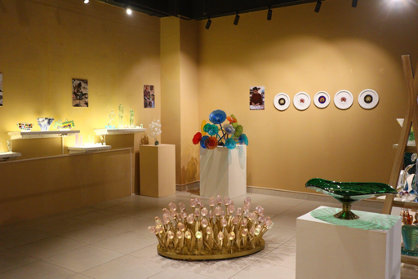
The Alchemy of Glass: The Kunj. Image Courtesy: The Glass Makers Club
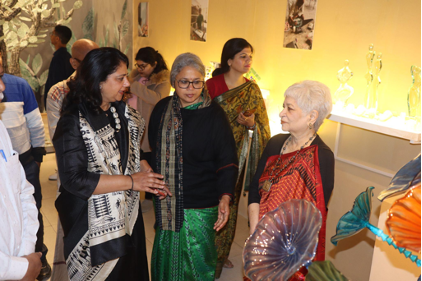
Ashwini Pai Bahadur Director The Glass Makers Club, Development Commissioner Office Ms Amrit Kaur, Laila Tyabji Founder Dastkar. Image Courtesy:The Glass Makers Club
BK: The question of sustainability also feels increasingly relevant. Many artists associated with TGMC work with recycled or locally sourced glass. How do you see this focus on material responsibility influencing both creativity and practice in the years ahead?
APB: Sustainability is not an add-on for us at The Glassmakers Club; it is becoming an increasingly core ethic that shapes both thinking and making. Glass, by its very nature, is an endlessly recyclable material. When artists begin to work consciously with recycled or locally sourced glass, it fundamentally changes their relationship with the medium. Constraints on material availability often lead to new vocabularies of form, scale, and technique, pushing creativity in both innovative and deeply grounded directions.
A significant example of this commitment is our project with Hyundai, where grant recipients worked with recycled automobile windshield glass, transforming what is otherwise industrial waste into refined art objects. This initiative did more than offer a sustainable material solution; it encouraged artists to rethink value, provenance, and the afterlife of materials. Windshield glass, with its specific properties and limitations, demanded experimentation and problem-solving, resulting in works that combined aesthetic strength with a compelling environmental narrative.
Beyond this, many TGMC-associated artists engage with locally sourced discarded architectural glass, bottles, and industrial offcuts, particularly in regions such as Firozabad, Bangalore, and Goa. These practices reduce dependence on imported raw materials and large-scale furnaces, while also fostering collaborations with local industries and artisan communities. We also see artists combining recycled glass with traditional techniques—casting, kiln-forming, and cold-working — to create contemporary expressions rooted in place and context.
Looking ahead, material responsibility will increasingly influence studio practices, production scale, and even pedagogy. Artists will be more conscious of energy use, sourcing, and waste, and institutions will need to support this shift through infrastructure and research. For TGMC, sustainability is about building a resilient ecosystem—one in which ecological awareness, social responsibility, and artistic excellence reinforce one another. In the years to come, I believe this approach will not limit creativity, but rather deepen it, giving rise to work that is both materially intelligent and culturally relevant.
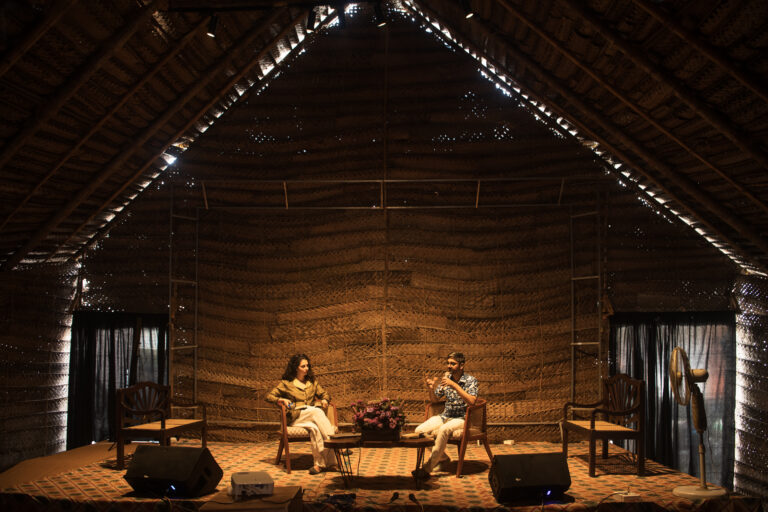
BK: That interest in dialogue and exchange was very much at the heart of the Mini Symposium on Conversations on Studio Glass at Travancore Palace. What inspired you to create that space for discussion, and what kinds of ideas or perspectives were you hoping to encourage through it?
APB: For me, the Mini Symposium at Travancore Palace came from a straightforward yet pressing need: to talk, listen, and think together. Studio glass in India is still a young and often misunderstood medium. Without spaces for dialogue, it risks remaining fragmented, practised in isolation rather than understood as a shared cultural and artistic language.

Image Courtesy: The Glass Makers Club
What inspired me most was the absence of sustained conversations around glass, conversations that go beyond technique and aesthetics to include history, pedagogy, sustainability, economics, and critical writing. Travancore Palace, with its layered sense of history, felt like the right setting to slow down and reflect, rather than rush towards outcomes or exhibitions.
Through the symposium, I hoped to encourage multiple perspectives to sit at the same table: artists, designers, educators, curators, collectors, and thinkers. I wanted practitioners to hear how their work is perceived, and equally, for non-makers to understand the material intelligence, labour, and risk that glass carries. It was important to me that the conversation acknowledged traditional knowledge from places like Firozabad, Kolkata, alongside contemporary studio practices, from Baroda, Ahmedabad and Bangalore, and that younger voices felt as valued as established ones.
At its core, the symposium was about building an ecosystem—where ideas circulate freely, disagreement is productive, and glass is discussed with seriousness and sensitivity. As The Glassmakers Club, our role is not just to showcase work, but to create platforms where thought, inquiry, and community can grow. That gathering was a step towards nurturing a more reflective, informed, and connected future for studio glass in India.
BK: Hosting the symposium alongside Hemi Bawas’ exhibition, Stories in Glass must have added a special resonance. How did her work and legacy shape the atmosphere of the evening and influence the conversations that unfolded?
APB: Hosting the symposium alongside Hemi Bawa’s “Stories … in Glass” exhibition gave the evening a quiet depth and emotional gravity. Her work carries a rare combination of technical mastery and lived wisdom, and being surrounded by it reminded everyone present that glass is not just a material, but a language, one that can hold memory, fragility, resilience, and time all at once. Notably, as a pioneering studio glass artist, Hemi Bawa was honoured with the Padma Shri by the Government of India, presented by the President of India, in recognition of her significant contribution to contemporary sculpture and studio glass practice in the country.
Hemi’s legacy shaped the atmosphere in a very organic way. Her practice embodies patience, rigour, and an unshakeable commitment to the medium, which sets the tone for the conversations. The discussions moved beyond surface-level aesthetics to questions of longevity, lineage, and responsibility, how artists sustain a practice over decades, how knowledge is passed on, and how one remains deeply engaged with material and meaning in an increasingly fast-paced world.
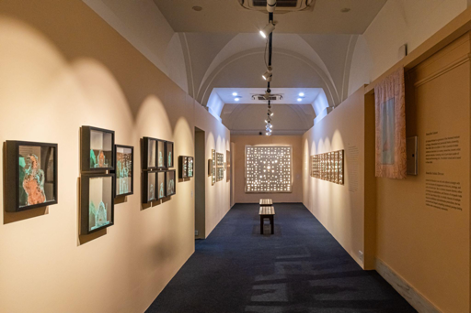
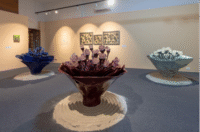
Stories in Glass, Travancore Palace, New Delhi. Image Courtesy: The Glass Makers Club
For many younger artists and practitioners in the room, her work acted as a silent mentor. It anchored the dialogue in lived experience and reminded us that experimentation and innovation are most powerful when rooted in deep understanding and perseverance. In that sense, Stories… in Glass was not just a backdrop to the symposium; it was an active presence, shaping the rhythm of the evening and gently guiding the conversations toward reflection, continuity, and respect for those who have laid the foundations of studio glass in India.
BK: Through initiatives like this, The Glassmakers Club has become a meeting point where art, craft, and design connect in meaningful ways. How do you see these different disciplines enriching one another within the context of Indian glass today?
APB: Through initiatives like “The Alchemy of Glass”, The Glass Makers Club has consciously positioned itself as a space where art, craft, and design do not exist in isolation, but inform and strengthen one another. In the Indian context, where glass has historically thrived in craft clusters such as Firozabad, while studio glass and design-led practices have evolved more recently, this intersection is particularly significant.
Craft brings with it generational skill, material memory, and technical discipline. Art introduces conceptual inquiry, narrative, and experimentation. Design contributes functionality, spatial thinking, and contemporary application. When these three converge, glass moves beyond being merely decorative or utilitarian; it becomes expressive, innovative, and relevant to present-day cultural and architectural contexts.
In today’s Indian glass landscape, this dialogue allows artisans to expand their vocabulary, artists to deepen their technical engagement, and designers to root their work in authentic material processes. The result is a more resilient ecosystem, one that honours traditional knowledge while encouraging experimentation, sustainability, and new markets. The Glass Makers Club seeks to nurture this exchange, creating a platform where skill meets imagination and the future of Indian glass can evolve collaboratively rather than in silos.
BK: The symposium itself also revealed the importance of bringing together making, teaching, and curating. How do you see these three worlds, practice, pedagogy, and curation, working in harmony to strengthen India’s studio glass ecosystem?
APB: The symposium clearly demonstrated that making, teaching, and curating are not parallel activities; they are interdependent pillars of a healthy studio glass ecosystem.
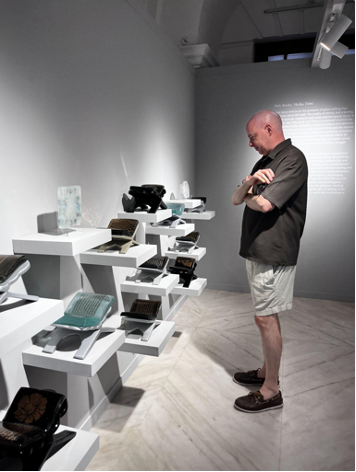
Installation View. Image Courtesy: The Glass Makers Club.
Throughout the making process, artists and artisans brought technical depth to the forefront: live demonstrations and discussions on flameworking, glass blowing, carving, fusing, and slumping made visible the rigour, risk, and discipline embedded in the material. Practice anchors authenticity. Without active makers, discourse becomes theoretical.
Pedagogy emerged as the bridge. When practitioners who teach, whether in institutions or workshops, shared their processes, they translated tacit knowledge into structured learning. Conversations around tool adaptation, kiln practices, annealing, surface treatment, and sustainability revealed how knowledge transmission is critical in a field where formal glass education remains limited in India. The symposium created space for younger participants to directly engage with senior practitioners, reinforcing continuity.
Curation provided the connective framework. By thoughtfully presenting diverse processes from traditional cluster-based craft to contemporary studio practice, the curatorial approach contextualised the works within a larger narrative of transformation and material intelligence. It shaped understanding, fostered dialogue, and positioned Indian studio glass within a national cultural discourse.
In harmony, these three spheres, practice, pedagogy, and curation form a cyclical system: making generates knowledge, teaching disseminates it, and curation gives it visibility and meaning. The symposium illustrated that strengthening India’s studio glass ecosystem requires all three to move in tandem, supporting skill, sustaining transmission, and elevating recognition at the national level.
BK: It was also interesting to see international practitioners such as Bjorn Borseth and Philip Hickok participate in the discussions. Why do you feel it is essential for Indian glassmakers to be part of a wider global conversation at this moment?
APB: The participation of international practitioners such as Bjorn Borseth and Philip Hickok, brought to India by Glass Sutra and by Reshmi Dey, added a valuable global perspective to the symposium, reinforcing the idea that glass, while rooted in local material cultures, operates within an international language of technique and experimentation. The dialogue was further strengthened by The Glass Makers Club’s visit to the Glass Art Society (GAS) conference in Texas in June 2025. Engaging with the GAS platform exposed Indian practitioners to global studio practices, research-led experimentation, advanced kiln and cold-working technologies, and institutional models that support glass as a serious contemporary art discipline. Such exposure is critical at this moment for India’s studio glass ecosystem.
For Indian glassmakers, being part of a wider global conversation is not about imitation; it is about positioning. It allows our artists to benchmark their work, build collaborations, explore residencies, and enter international exhibitions with confidence. At the same time, Indian practitioners bring to the table deep craft lineages, adaptability, and process innovation born from working within resource constraints.
Together, the symposium and the GAS engagement demonstrated that global exchange strengthens local practice. It expands technical knowledge, sharpens conceptual frameworks, and elevates recognition, ensuring that Indian studio glass is not peripheral, but an active contributor to the evolving international discourse on glass.
Equally important is visibility. Indian studio glass is still emerging on the global stage. Engaging with international practitioners allows our artists to benchmark, collaborate, and position their work within international exhibitions, residencies, and academic networks. It shifts the narrative from imitation to dialogue, from catching up to contributing.

Glassmakers at Glass blowing studios at Glass Art Society, Texas, 2025
The symposium demonstrated that such exchanges are not about comparison, but about reciprocity. Indian makers bring centuries of craft lineage, adaptability, and material ingenuity. International artists bring different institutional structures and research-driven approaches. When these meet, the ecosystem expands not only in technical knowledge but in confidence, ambition, and global relevance.
BK: Looking ahead, the forthcoming Indian Glass Triennale sounds like a landmark event. What is your vision for the Triennale, and how do you hope it will help position Indian glass within the international art community?
APB: The forthcoming Indian Glass Triennale represents, for us, a decisive step toward giving glass in India the institutional seriousness and visibility it deserves. My vision is for the Triennale to become a recurring, research-driven platform that brings together studio artists, traditional artisans, designers, educators, technologists, and curators within a single national framework while remaining outward-looking and internationally engaged.

Image Courtesy: The Glass Makers Club
At its core, the Triennale should do three things. First, it must map the breadth of Indian glass practice, from cluster-based craft traditions to experimental studio work, public art, architectural glass, and material innovation. Second, it should create structured dialogue through symposiums, demonstrations, and academic panels, ensuring that practice, pedagogy, and curation continue to move in tandem. Third, it must actively foster international participation through invited artists, cross-border collaborations, and institutional partnerships so that Indian glass is not seen in isolation, but in conversation with global developments.
I hope the Triennale will help reposition Indian glass from being perceived primarily as industrial or decorative to being recognised as a rigorous contemporary art medium. By presenting technical excellence, conceptual depth, and curatorial clarity on an international platform, we can assert that India is not only preserving craft heritage but also contributing meaningfully to the global discourse on glass.
BK: And finally, you describe The Glassmakers Club as a movement rather than simply an organisation. What does that movement represent for you personally? When you look towards the future, what kind of legacy do you hope to leave for the next generation of glassmakers in India?
APB: When I describe The Glass Makers Club as a movement rather than simply an organisation, I mean that it is driven by intent, not structure. It represents a collective shift in how we see glass in India from a marginal or purely industrial material to a serious artistic, intellectual, and cultural medium. For me personally, it is about building a space where artists, artisans, designers, educators, and institutions can meet without hierarchy, where traditional knowledge and contemporary experimentation are equally valued.
The movement stands for visibility, dignity of labour, and knowledge-sharing. It is about creating platforms where a flameworker from Firozabad, a studio glass sculptor from Baroda, a designer, and an international practitioner can sit at the same table and speak a common material language. It is also about creating opportunities that many of us did not have—access to exhibition spaces, global networks, technical dialogue, and institutional recognition.
Looking ahead, the legacy I hope to leave is not just a series of exhibitions, but an ecosystem. I would like the next generation of Indian glassmakers to inherit stronger infrastructure, clearer pathways for education and mentorship, international connections, and the confidence to see themselves as contributors to a global discourse. If The Glass Makers Club can help normalise collaboration, elevate standards, and ensure that glass art in India is both preserved and propelled forward, then the movement will have fulfilled its purpose.