shopping-cart
search
×

researchers

feature
Review

A Bridge is built from Two Sides: Far Reaching Earth, Far Extending Sky, Spread like a Mat, Covered like a Bowl

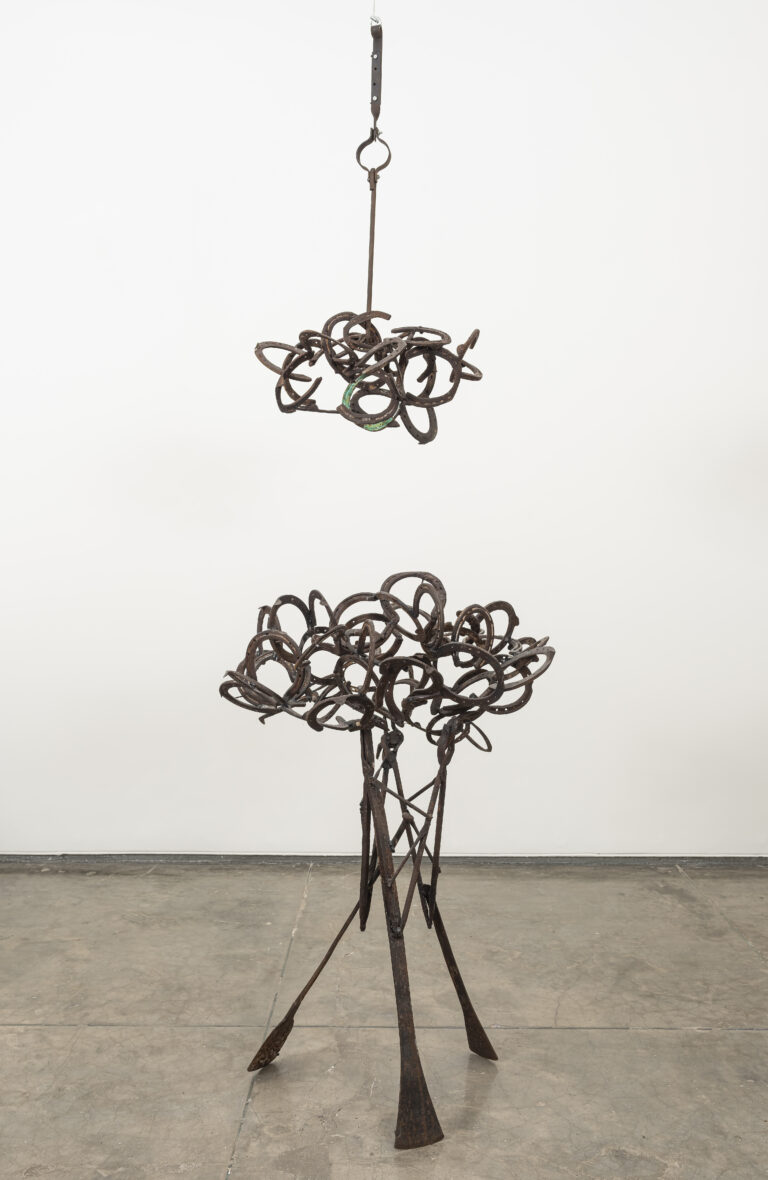
In a conversation between Korram and Rahee Punyashloka, the curator of exhibition, the former remarks that guns, whether toys or weapons in the hands of guards, are part of daily life in Bastar. During elections, festivals and other such large gatherings, the presence of armed personnel is naturalised under the name of security. The effect is to position violence not at the periphery but at the centre of experience, where it becomes impossible to separate civic, ritual or recreational activities from the shadow of militarisation. In particular, these sculptures  highlight the speed of modern forms of violence and deforestation, such as automatic weapons, heavy machinery for logging and armed jeeps used by hunters.

Read More
feature
Interview

Kristine Michael Reflects on the Legacy of Vimoo Sanghvi

We are trying to both celebrate Vimoo’s life and works as well as bring her into the spotlight once again in the history of modern art in India, which often overlooks clay as a medium of expression and lesser-known artists. Much more work needs to be done in the project, for example, in both her teachers’ archives Ronald Cooper of the Willingdon Art School and Marianne de Trey’s archives in the UK. She did exhibit at the Commonwealth Artists Exhibition at the V&A Museum as well in the 70s.

Read More
feature
Review

Fragile worlds

Ravikumar Kashi’s ‘Fragile Worlds’ at the Museum of Art and Photography, Bengaluru, evokes the permeability of form, memory, and meaning. Through delicate, net-like sculptures and poetic explorations of language, the exhibition invites viewers into a tactile, immersive meditation on fragility, interconnectedness, and the porous edges of self and society.

Read More
feature
Book Review

The Archetypal Artist, Francis Newton Souza

This review by Dr Alka Pande explores 'F.N. Souza: The Archetypal Artist' by Janeita Singh (Niyogi Books), a bold and interdisciplinary examination of one of India’s most controversial modernists. Blending Jungian psychoanalysis, feminist literary theory, and cross-cultural philosophy, Singh offers a fresh, intimate lens into Souza’s work—unpacking themes of sexuality, shadow, and modernity with remarkable clarity and conviction. A compelling contribution to postcolonial readings of Indian art.

Read More
feature
Review

Visceral Realities: Experiencing the Works of Jogen Chowdhury

This review by Dr. Aranya Bhowmik explores In Celebration: Jogen Chowdhury at Art Exposure Gallery, Kolkata. Curated by Soumik Nandy Majumdar, the exhibition traces Chowdhury’s evolving visual language—spanning refugee memories, surreal dreamscapes, and politically charged figures—revealing a deeply personal modernism marked by psychological depth, empathy, and cultural rootedness.

Read More
feature
Column

Kalighat Painting and Kalam Patua: Contemporary Chronicler

Kalam Patua is considered to be a phenomenon to understand the response of a traditional folk visual artist (the patua or the maker of the pata) to the non-academic and popular art practices of urban Kolkata, the Kalighat patachitra. Hailing from the Murshidabad district of Bengal, Kalam Patua is said to have reinvented Kalighat painting to create his own visual narratives and stabilise his rhetoric, style and technique. Patua started as an apprentice in his family of idol-makers in Murshidabad, and learnt patachitra painting which was the hereditary practice of his extended family spread in the two districts of Murshidabad and Birbhum.

Read More
1 2 3 24
advertisement