

ONE DOES NOT have to look too far to find the defining images of today’s India. They stare back at us in public, like the arresting, belligerent face of a saffron Hanuman, popularised in 2018 and pasted on the windscreens of cars. Or they crawl their way into our social media feeds, like the suited-up, sunglass-sporting, victorious insect in the logo of the newly emerged Cockroach Janata Party.
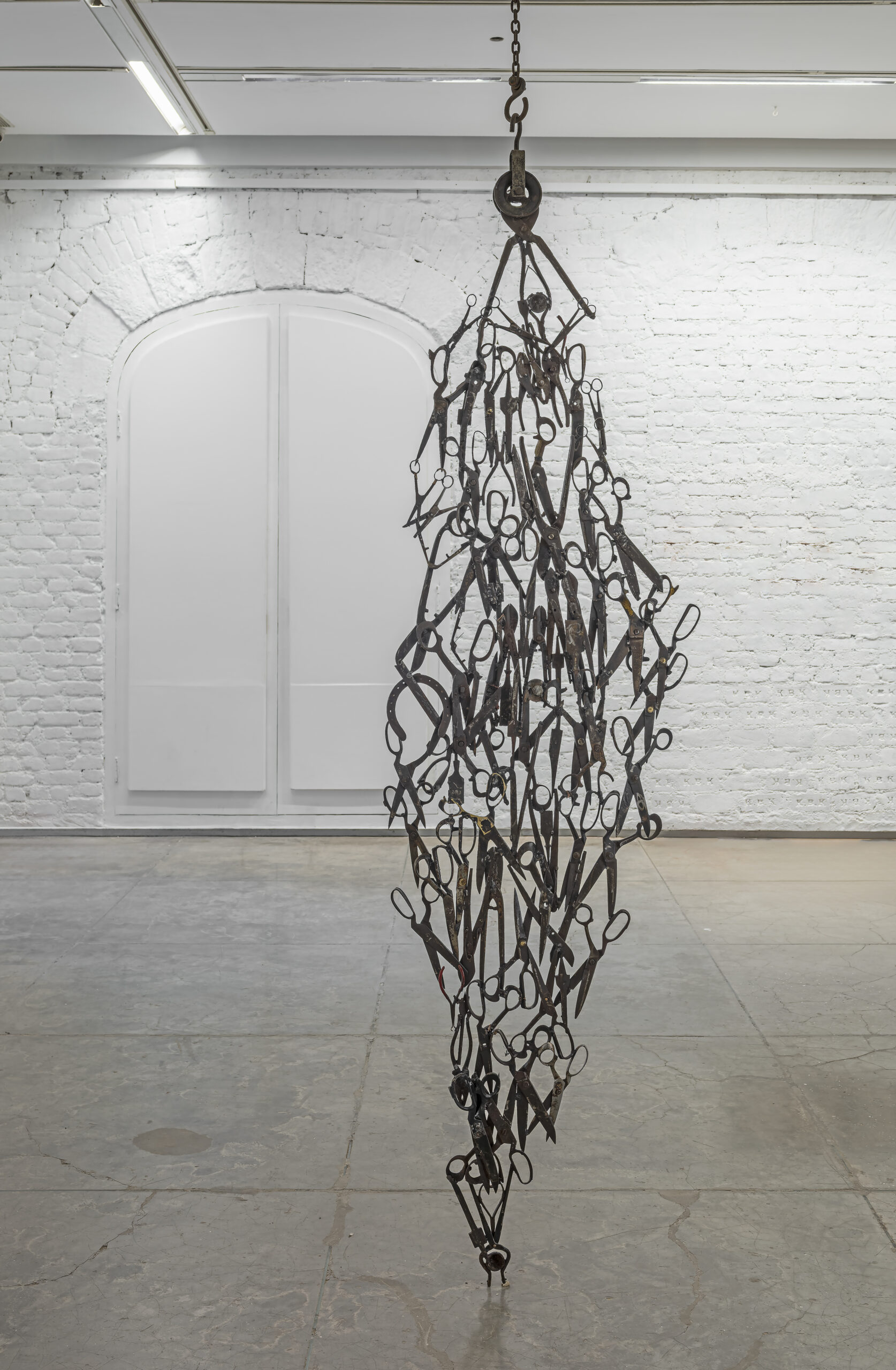
Archana Hande. The Narmada Fish. The Last Rust. Chemould Prescott Road, Mumbai. 2023
In her solo show The Last Rust, Archana Hande turns her attention to older, more revered images. Drawing from Émile Durkheim’s conception of totemism, she revisits symbols in the context of the Indian nation-state: institutionalised ‘totems’ like the national bird and animal, sans nostalgia. To this end, she constructs sculptures from scrap—blades and scissors, for example: scavenged from Gujari (flea) markets organised on Sundays. Fittingly, sickles and a long machchu or iron bill hook are woven together to form the torso and limbs of The Royal Bengal Tiger. The same menacing machchu blade, combined with farming and horticultural tools, assumes a more graceful form in The Indian Peninsula Peacock, which seems to evoke both the subcontinent’s unique geography, and the Ashoka Chakra.
On display, first and foremost, is Hande’s ability to transform what is deemed detritus into something entirely new, while holding onto past meanings, resulting in multilayered installations. For example, in Historical Amnesia, housed within light boxes, she sketches on carbon paper collected from a typist near Mumbai’s Bombay Sessions Court. If the viewer peers closely, they will see remnants of the carbon papers’ past lives. “These monuments subvert symbolic expectations by evoking skeletons, corpses, and carapaces—decomposing and mutating. Each object within the assembly carries its own class, gender, and caste history, embedded within the lives of those existing on the margins of society,” architect and filmmaker Rohan Shivkumar observes in his text accompanying the exhibition.
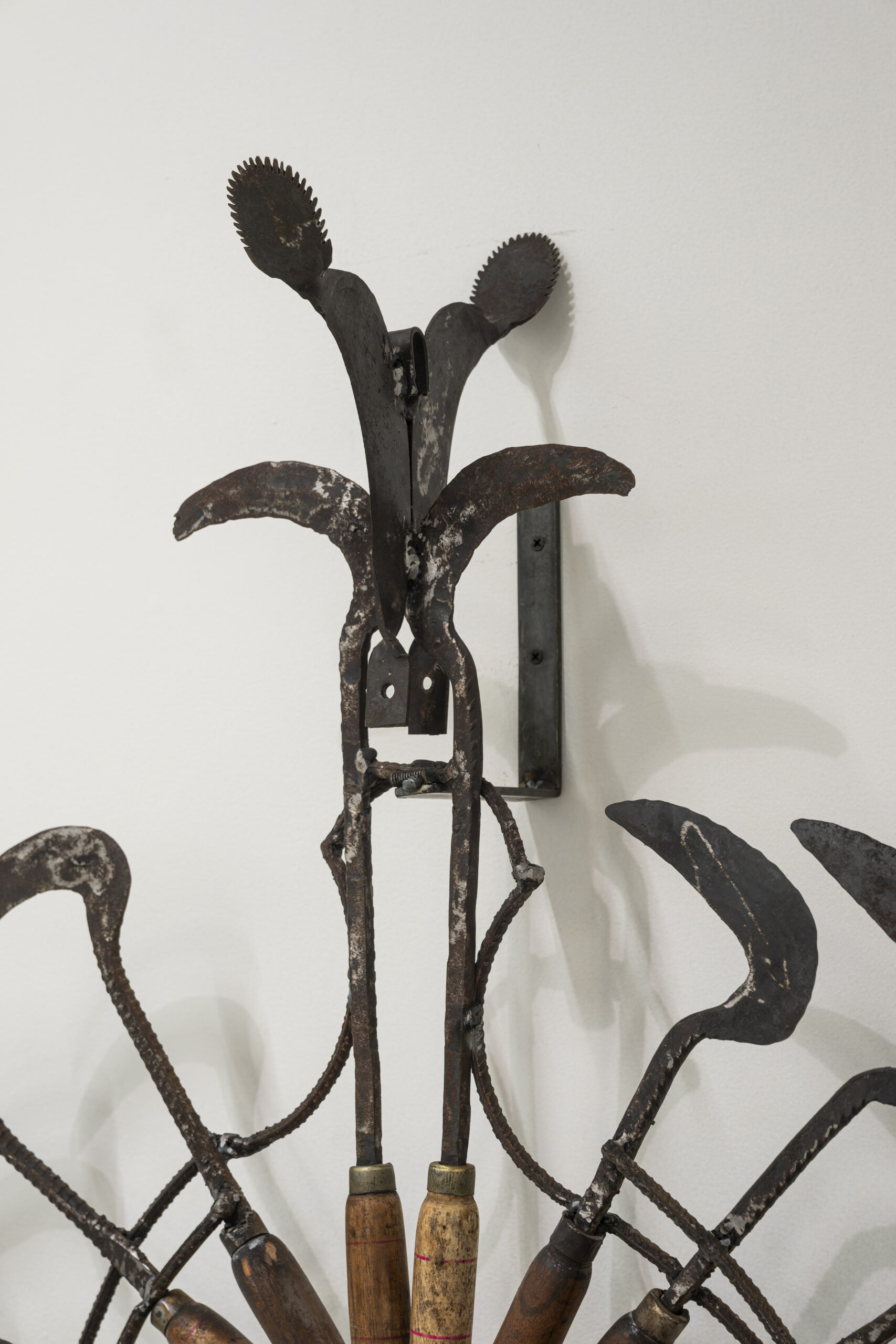
Archana Hande. The Indian Peninsula Peacock. The Last Rust. Chemould Prescott Road, Mumbai. 2025-26
On her visits to scrap markets like Bengaluru’s Shivajinagar Market and Mumbai’s Chor Bazaar, Hande does not typically walk in with pre-imagined frameworks; instead she takes away objects that speak to her, and revisits them at her studio. Many of these objects are the tools of highly skilled workers, thus making the works in The Last Rust a juxtaposition of totemic power and the labour of highly skilled workers across community kitchens, garment weaving, construction and agriculture. The subversion inspires interpretation, provoking the viewer to wonder about the greatness of India and how central workers in formal and informal sectors, invisibilised, unlike entrepreneurs and scientists, have been to it. Beyond interpretations of a more simpler nature, one wonders if and how these national symbols speak to the workers’ realities.
The formation of ‘rust’ over institutions and symbols is an inevitability in a changing society; every few years, a new India forms, like a tree’s growth rings or layers of earth building upon each other. A scratching of the surface, the artist says, reveals what came before. To Hande, who initially conceptualised these works for the 2022 Kochi-Muziris Biennale, rust is a metaphor for the corrosion of democratic and secular values that India once espoused. At a time when the names of stadiums, bridges and even cities are changed to sever connections to history: colonial or otherwise, and controversial deletions in school textbooks have been normalised, rust is a powerful vehicle to convey how outward signs of societal decay point to an inward hollowing.
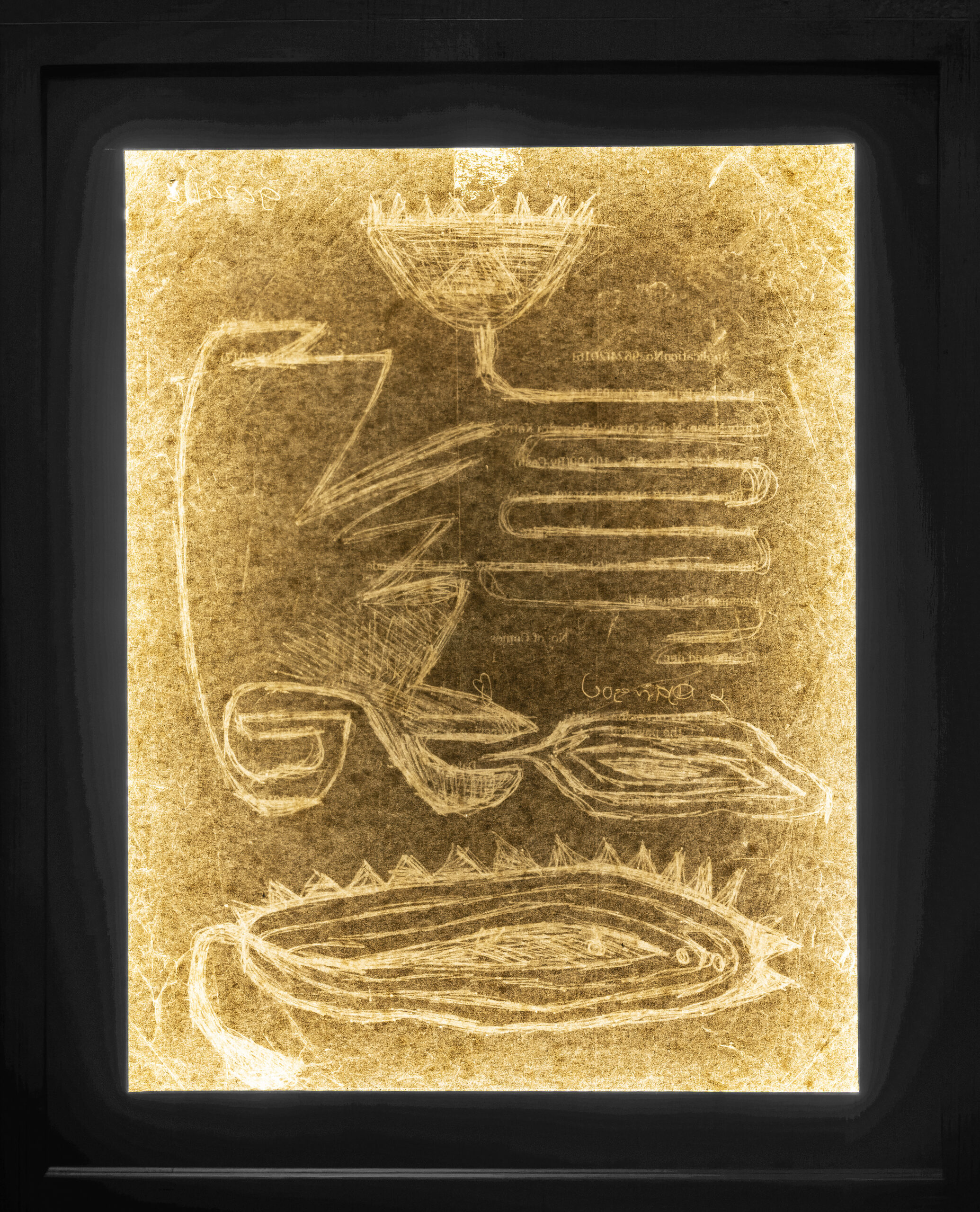
Archana Hande. Historical Amnesia. The Last Rust. Chemould Prescott Road, Mumbai. 2022
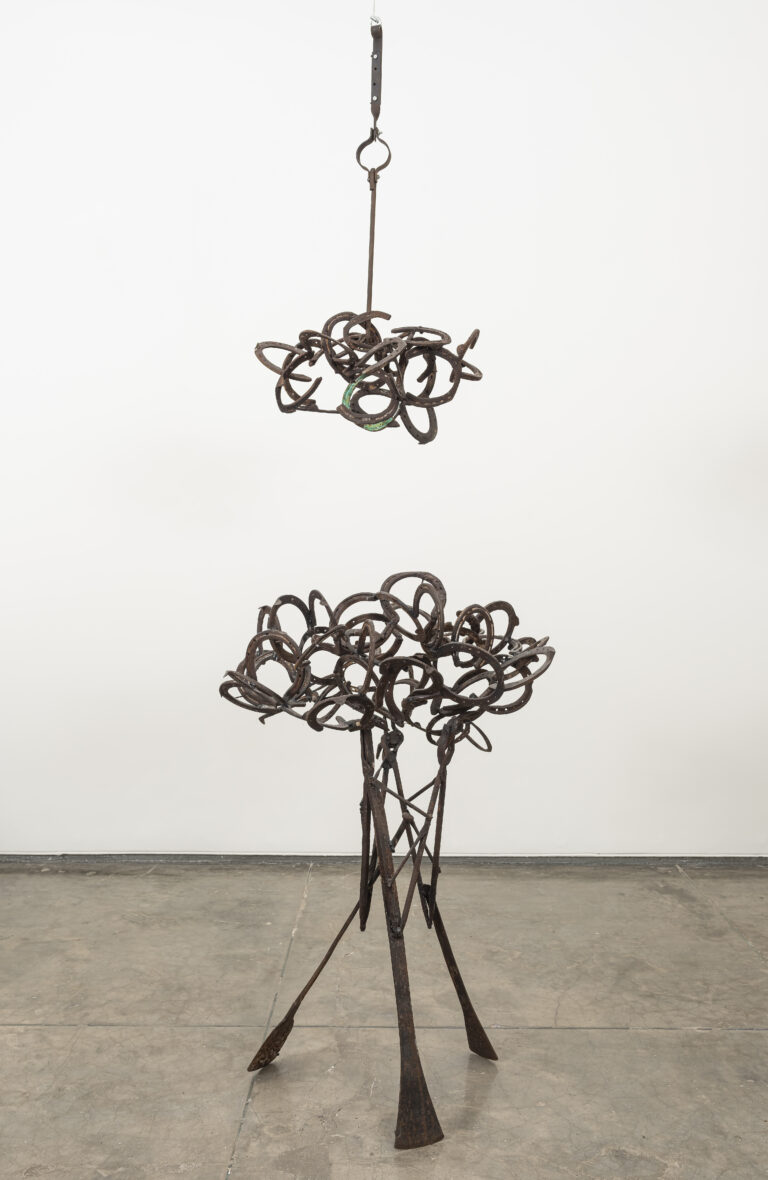
In combination with its metaphorical value, the use of rust, at once brittle and abrasive, is compelling. Intrinsic to the state in which the objects were found, rather than an effect artificially engineered in the artist’s studio, it seems to be material and medium, melding together disparate objects from entirely different contexts, enabling them to take on a new, shared meaning. It is to Hande’s credit that something as heavy and weatherbeaten as horseshoes can be imbued with a sense of lightness and delicateness in a work like The Cloud.
By virtue of being sourced at scrap markets, the objects are now living out their second or third lives. In present times, India’s repair economies, from the art of rafoogari (expert darning) to low-cost appliance repair, are slowly losing out on past relevance thanks to a use-and-throw culture taking hold. (Hande is no stranger to this culture, as a documentarian of “rejected gods” in a series of photographs from 2011, where she captures how even pictures and idols of gods are abandoned and dumped in public because of defects.) The Last Rust opens up a conversation about hope-giving repairwork of the social kind, “where a new future can be assembled out of discarded scraps as a defense against despair,” as Shivkumar articulates in his note.
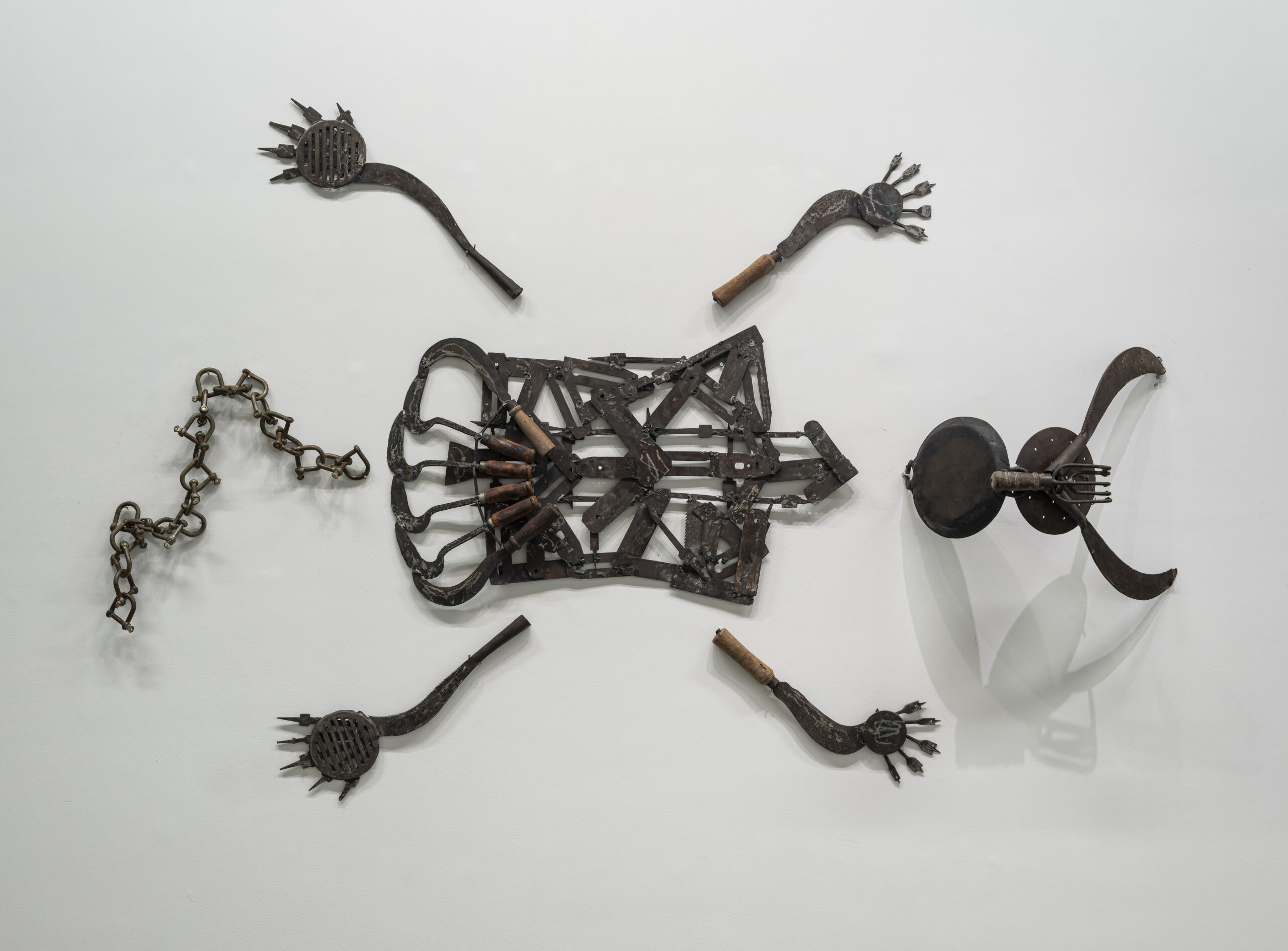
Archana Hande. The Royal Bengal Tiger. The Last Rust. Chemould Prescott Road, Mumbai. 2025-26
It seems to reflect in Hande’s own practice: Weaving Light, a tessellating installation whose surface is made of jacquard punched cards once used in textile looms, shapeshifts across exhibitions and biennales, without ego or rigidity. Or as gallerist Shireen Gandhy recalls of a video taken after the 2022 Kochi-Muziris Biennale: the artist recorded the demolition of her works, only to rebuild them for the 2026 show.
Archana Hande, The Last Rust, 7 March 2026-30 April 2026, Chemould Prescott Road.