shopping-cart
search
×

Take Pick

feature
Interview

Unfolding the Possibilities of South Asian Contemporary Practice

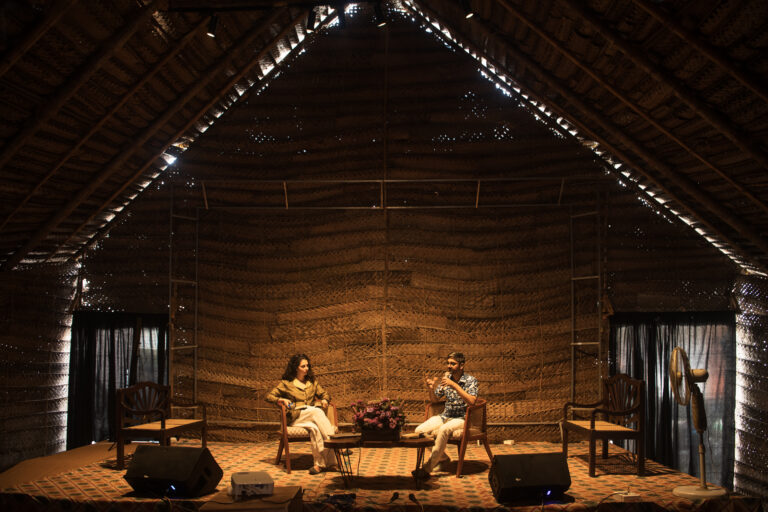
As the art forces flourish across the globe through international fairs, festivals and biennales, creative collaborations have become the key driving force to enable such expansive cultural possibilities. These partnerships strengthen artistic ecosystems to anchor conversations that transcend geographical and political borders. Within South Asia, this exchange remains a generative terrain shaped by shared histories, interconnected cultural lineages and pressing contemporary urgencies. The region continues to be a fecund ground for artists and institutions to build new networks, to deflate the conventions and explore resonant narratives that speak to both local realities and global concerns. Building on this ongoing cycle of cross-cultural dialogue, Bhavna Kakar, Editor-in-Chief of TAKE on Art magazine, visited KALĀ at the invitation of Saskia Fernando, Founding Director of the institution. Their meeting  oriented towards the renewed commitment to strengthening regional artistic discourse and imagining collaborative futures. In this interview, Kakar sits down with Fernando to reflect on the dynamic possibilities unfolding across the South Asian art landscape: its emergent practices, its evolving networks, and the artists whose voices and visions are defining our contemporary moment. Together, they illuminate on how regional solidarity continues to shape the trajectory of art today.

Read More
feature
Review

A Bridge is built from Two Sides: Far Reaching Earth, Far Extending Sky, Spread like a Mat, Covered like a Bowl

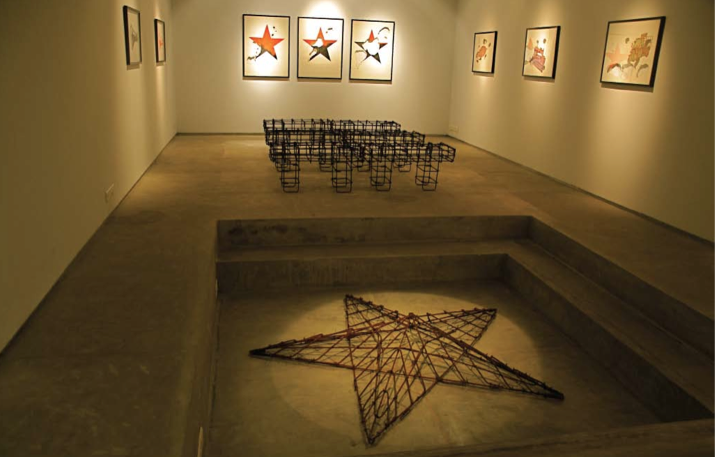
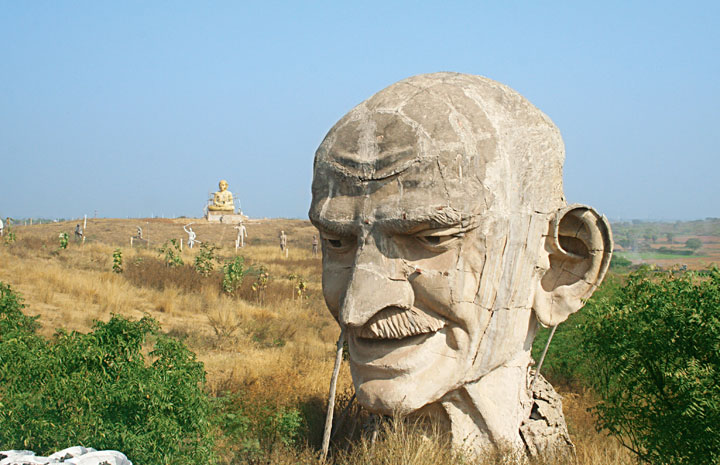
In a conversation between Korram and Rahee Punyashloka, the curator of exhibition, the former remarks that guns, whether toys or weapons in the hands of guards, are part of daily life in Bastar. During elections, festivals and other such large gatherings, the presence of armed personnel is naturalised under the name of security. The effect is to position violence not at the periphery but at the centre of experience, where it becomes impossible to separate civic, ritual or recreational activities from the shadow of militarisation. In particular, these sculptures  highlight the speed of modern forms of violence and deforestation, such as automatic weapons, heavy machinery for logging and armed jeeps used by hunters.

Read More
feature
Interview

Kristine Michael Reflects on the Legacy of Vimoo Sanghvi

We are trying to both celebrate Vimoo’s life and works as well as bring her into the spotlight once again in the history of modern art in India, which often overlooks clay as a medium of expression and lesser-known artists. Much more work needs to be done in the project, for example, in both her teachers’ archives Ronald Cooper of the Willingdon Art School and Marianne de Trey’s archives in the UK. She did exhibit at the Commonwealth Artists Exhibition at the V&A Museum as well in the 70s.

Read More
feature
Review

Fragile worlds

Ravikumar Kashi’s ‘Fragile Worlds’ at the Museum of Art and Photography, Bengaluru, evokes the permeability of form, memory, and meaning. Through delicate, net-like sculptures and poetic explorations of language, the exhibition invites viewers into a tactile, immersive meditation on fragility, interconnectedness, and the porous edges of self and society.

Read More
feature
Book Review

The Archetypal Artist, Francis Newton Souza

This review by Dr Alka Pande explores 'F.N. Souza: The Archetypal Artist' by Janeita Singh (Niyogi Books), a bold and interdisciplinary examination of one of India’s most controversial modernists. Blending Jungian psychoanalysis, feminist literary theory, and cross-cultural philosophy, Singh offers a fresh, intimate lens into Souza’s work—unpacking themes of sexuality, shadow, and modernity with remarkable clarity and conviction. A compelling contribution to postcolonial readings of Indian art.

Read More
1 2 3 24
advertisement