feature

A Repository of Rich Indian Art finds a New Life in Bihar Museum | Interview with Anjani Kumar Singh by Bhavna Kakar 

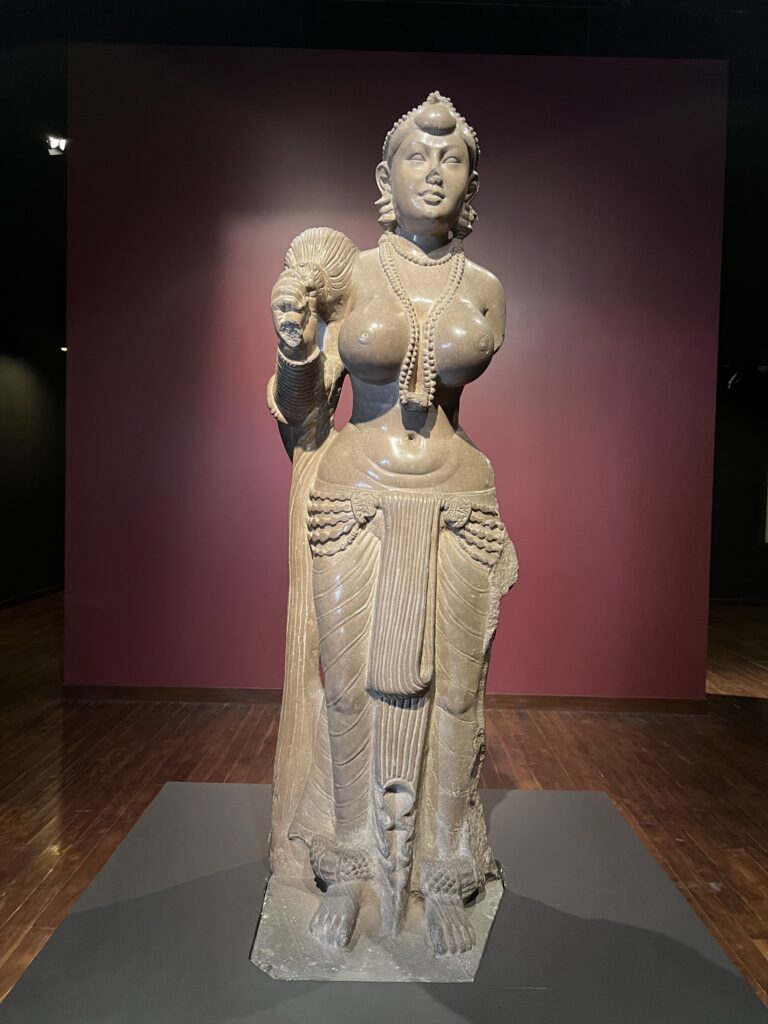
The renewed interest of the public towards museums and artefacts overlaps with the urgency to trace the making of nation-histories in an effort to disturb the binaries between the Global North and the Global South. The practice of decolonizing the spaces of museums, which have long followed the blueprint on categorization, documentation, and preservation put into force by the field of continental museology, has opened a fecund site to anchor multiple, rather than binary, perspectives. The newly constructed Bihar Museum by the world-renowned Japanese architect Fumihoko Maki and Associates, located in the heart of Patna city, is an exemplification of the aforementioned proposition. As the forerunner in politics, especially in ancient India, Bihar has always been a rich repository of art, philosophy and literature. During my first visit to the exhibition Women and Deities, curated by Dr Alka Pande - featuring 156 antiquities from the Bihar Museum's reserve section as well as 10 works from the Bihar Museum's contemporary gallery - at the Bihar Museum I had an opportunity to experience what it holds within its wide expanse. In my conversation with Anjani Kumar Singh, chairman of the Bihar Museum’s advisory committee, advisor to the Chief Minister and former Chief Secretary of Bihar, he spoke about the novel endeavours undertaken to give the Bihar museum a global face.

Read More
feature

MOVING TOGETHER: Tropical Choreographies at the Curators’ Hub

In her essay ‘When Was Modernism in Indian Art?’ the critic Geeta Kapur putsforth the argument of the unsteady status of modernism as being simultaneously desired and abhorred amidst anti-colonial struggles and how it reflected in the practices of artists like Ramkinkar Baij at Kala Bhavan in Santiniketan, moving towards “postcubist expressionism” with his abstract sculptures drawing figures from his everyday life – or Jamini Roy beyond the Kala Bhavan circuit in Kolkata, amalgamating “folk iconicity” and “urban commodification”. The art historian R. Siva Kumar would term this shift in practice as “contextual modernism”, foregrounding Santiniketan as a generative ground for this turn in Indian modern art.

Read More
feature

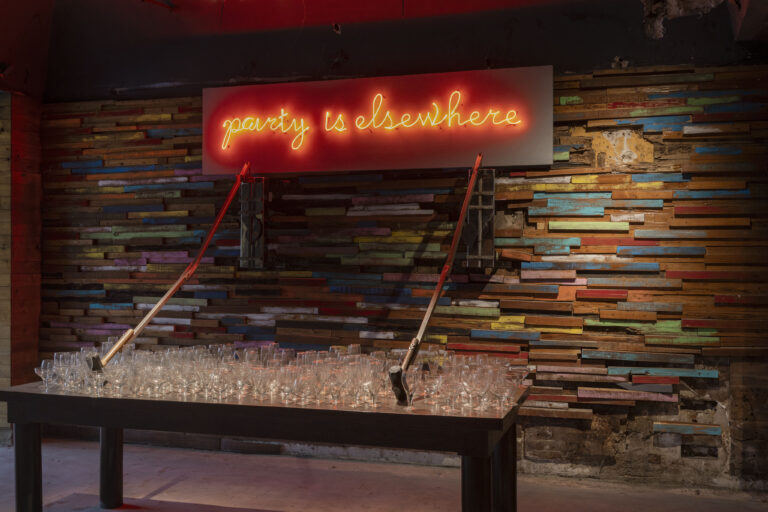
Echoes of Ephemera: Party is Elsewhere

If a thing of beauty is a joy forever, as English poet John Keats would have us believe, then what is to be made of a show that highlights decrepitude? Is its job to remind us of the ephemeral nature of life and everything in it? That the value of the grotesque and the repulsive is in its mere existence, as it allows pretty perfection to stand out further? Or, alternatively, does the unpleasantness itself hold value as a much-needed contrast to whitewashed ideals? These are some of the questions that come to mind upon browsing through ‘Party is Elsewhere’, a multi-artist showcase which took place in February this year as an India Art Fair Parallel offering. 

Read More
feature
feature

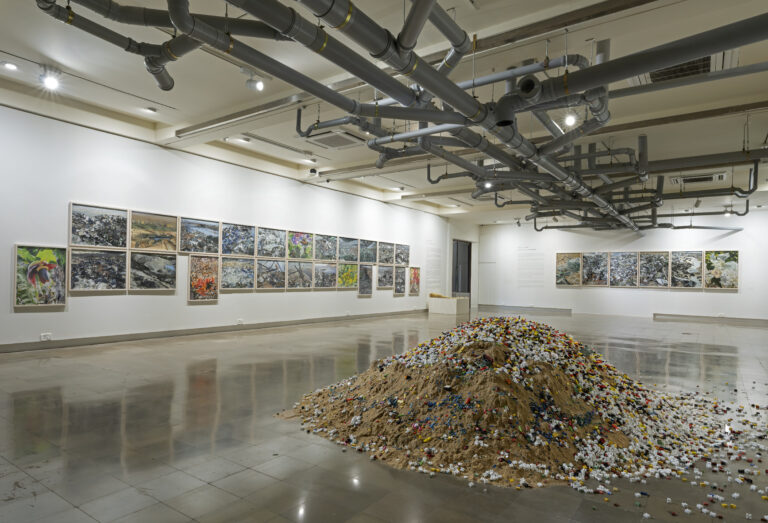
On Unequal Burdens: Waste and Toxicity in Navjot Altaf’s New Works

The collective title of the paintings, Waste Archive as Landscape, suggests they are meant to be archives. If so, they are archives that are out of reach, whose contents cannot be discerned. Perhaps this effect is a reference to the impact of the limitless cycles of production of products that humans cannot entirely grasp or catalogue. On the contrary, those who live on the edges of landfills, both humans and nonhuman living beings, suffer the consequences viscerally.

Read More